
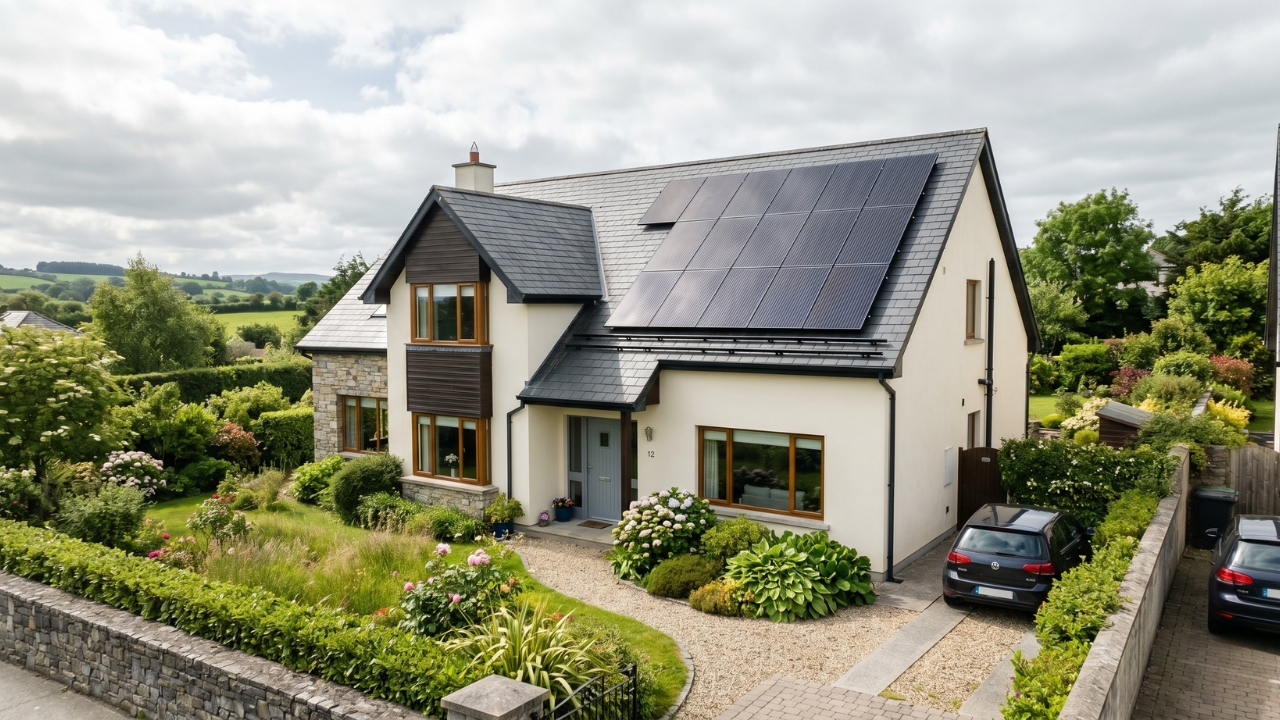
Irish electricity prices have not fallen back to where they were five years ago, and most homeowners now treat solar PV as a serious money-saving investment rather than a green tick-box. The good news is the government has not pulled back on support, and you can still claim a grant of up to €1,800 toward your installation in 2026.
The SEAI Solar Electricity Grant covers part of the cost of fitting solar panels on your home, with the exact figure depending on your system size. To qualify, your home must have been built and occupied before 1 January 2021, you must use an SEAI-registered installer, and you must apply for grant approval before any work starts on the roof.
There is one rule that trips most people up. You have to apply for the grant before any installation work starts. Skip that step and the money is gone. Here is how the grant actually works, who qualifies, and exactly how to apply without losing out.
What Is the SEAI Solar Panel Grant?
The Solar Electricity Grant is run by the Sustainable Energy Authority of Ireland (SEAI) on behalf of the government. It contributes a fixed amount toward the cost of installing solar PV panels on a private dwelling, and it forms part of the National Retrofit Plan to help cut household electricity bills and carbon emissions.
The grant is paid as a one-off lump sum directly to you after your installation has been signed off and a post-works BER assessment has been completed. It only covers the panels and the installation itself. Battery storage is not grant-aided separately, though plenty of homeowners still combine the two for better self-consumption, which we cover in our guide on pairing solar with home battery storage and how that affects your daily savings figures.
How Much Is the Solar Panel Grant Worth in 2026?
The maximum residential grant for 2026 is €1,800. That cap applies to systems of 4 kWp or larger, which is the most popular size for a typical Irish three- or four-bed home. A planned reduction to €1,500 was reversed late in 2025, so the figure is unchanged from the previous year.
The grant is paid pro-rata for smaller systems, and the calculation is simple enough once you see it written down.
- €700 per kWp for the first 2 kWp of installed capacity.
- €200 per kWp for any additional kWp up to 4 kWp.
- Anything above 4 kWp is not grant-aided, but you can still install a larger array.
So a 2.5 kWp system, for example, would receive €1,500 (€1,400 for the first 2 kWp plus €100 for the extra 0.5 kWp). A 3 kWp system gets €1,600, and anything 4 kWp and over hits the €1,800 ceiling.
There is a separate financial sweetener worth knowing about. Solar PV supply and installation has been zero-rated for VAT since May 2023, which knocks another chunk off the total bill before the grant is even applied. For a 5.5 kWp system priced around €11,000 before incentives, the combined effect of the grant and 0% VAT brings the headline cost down meaningfully, and most households see payback inside seven years as we explain in our breakdown of solar panel return on investment in Ireland and the typical year-by-year savings.
Who Qualifies for the SEAI Solar Grant?
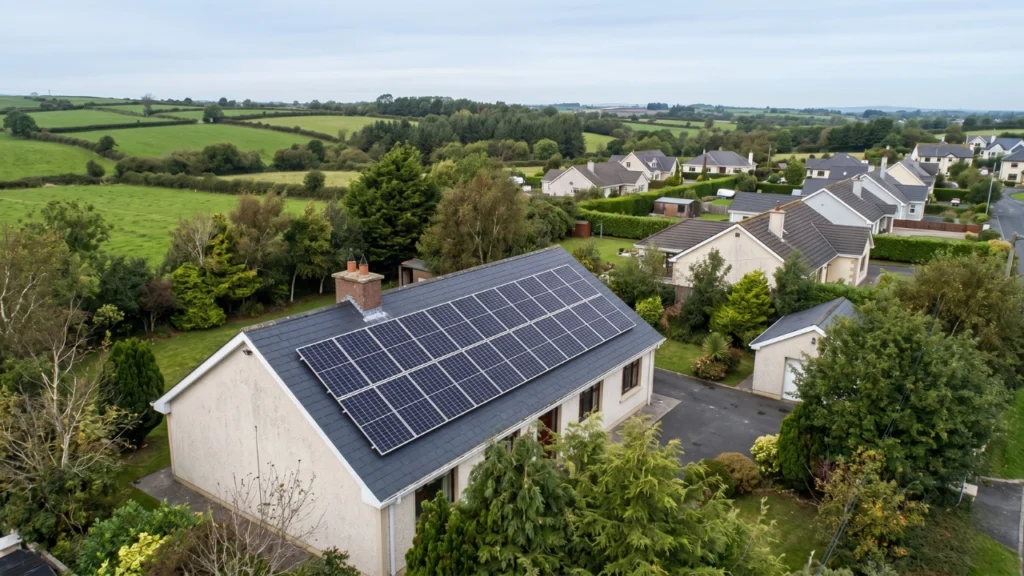
Eligibility for the residential grant is property-based, not income-based. There is no means testing. The full criteria are set out on the official SEAI Solar Electricity Grant page, but the headline checks are listed below.
- Your home must have been built and occupied before 1 January 2021 (SEAI uses your electricity meter installation date to confirm this).
- You must be the homeowner or a private landlord. Tenants cannot apply.
- The property must have a valid Meter Point Reference Number (MPRN), found at the top of any electricity bill.
- The MPRN must not have received SEAI solar PV funding before. One grant per address, ever.
- You must use an SEAI-registered solar PV company for the installation.
Residential Versus Commercial Eligibility
Different rules apply for businesses and farms. The Non-Domestic Microgen Grant (NDMG) is open to commercial properties, with a maximum of €162,600 for larger systems. Farmers can access the TAMS 3 scheme through the Department of Agriculture, and primary or secondary schools may qualify under the Schools Photovoltaic Programme. If you run a business and want a sense of the wider picture, our piece on commercial solar installation benefits walks through the savings logic before you even look at grants.
How Do You Apply for the Solar Panel Grant Step by Step?
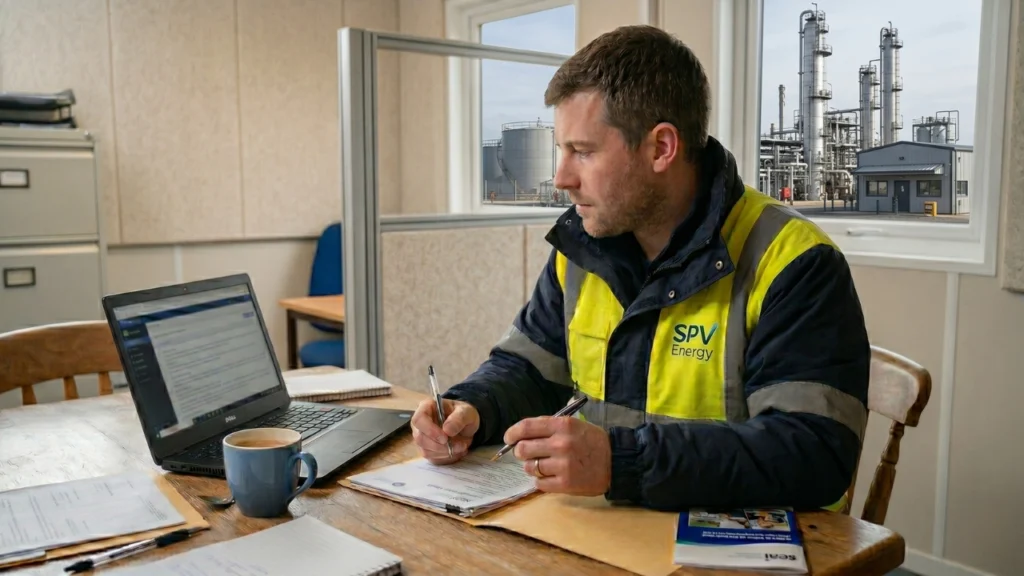
The order of operations matters here. If work starts before SEAI issues written approval, you lose the grant. Full stop. The good news is that you do not need to handle most of this on your own. SPV Energy offers the SEAI grant as part of every residential install, with full paperwork managed in-house from start to finish.
Once you agree a quote in writing, SPV Energy lodges the SEAI grant application on your behalf before any installation work begins. The grant offer letter is usually issued within minutes, sometimes a few days. Approval in hand, the install is then scheduled at a time that suits you, and a typical residential setup is completed inside a single day on the roof.
After commissioning, an SEAI-registered BER assessor carries out the post-works BER assessment, and SPV Energy submits the Declaration of Works and final paperwork to SEAI. Payment lands by electronic transfer directly into your bank account once everything is reviewed and signed off, often within 21 days of works completion. Most homeowners never have to deal with SEAI directly beyond signing their own application, and SPV Energy will time the install around the optimum window covered in our note on the best time to install solar panels in Ireland for maximum first-year output.
Common Mistakes That Cost People Their Grant
The grant is not difficult to claim if you follow the rules. Most people who lose out lose out for the same handful of reasons. Watch for these.
- Starting installation before grant approval comes through. The grant cannot be backdated under any circumstances.
- Using a solar company that is not SEAI-registered. Always check the SEAI register before signing anything.
- Missing the eight-month window to complete the work after grant approval.
- Forgetting the post-works BER assessment, which is mandatory for payment.
- Trying to claim the grant on a home built after 1 January 2021. Newer builds are excluded under the NZEB rules.
- Assuming battery storage is grant-aided. It is not, even though installers can still fit one alongside.
Each one of these is preventable with five minutes of attention upfront.
Make the SEAI Grant Work for You
The SEAI grant is one of the most generous home energy supports still on the table in Ireland in 2026. The application is the easy part. Picking the wrong installer is what costs people money. With over 3,000 installations completed nationwide and full grant paperwork handled in-house, SPV Energy takes the admin off your plate and gets the cheque into your bank account once the panels are on the roof. Get in touch on 049 489 1207 for a no-pressure quote and a clear answer on what your home will qualify for.