
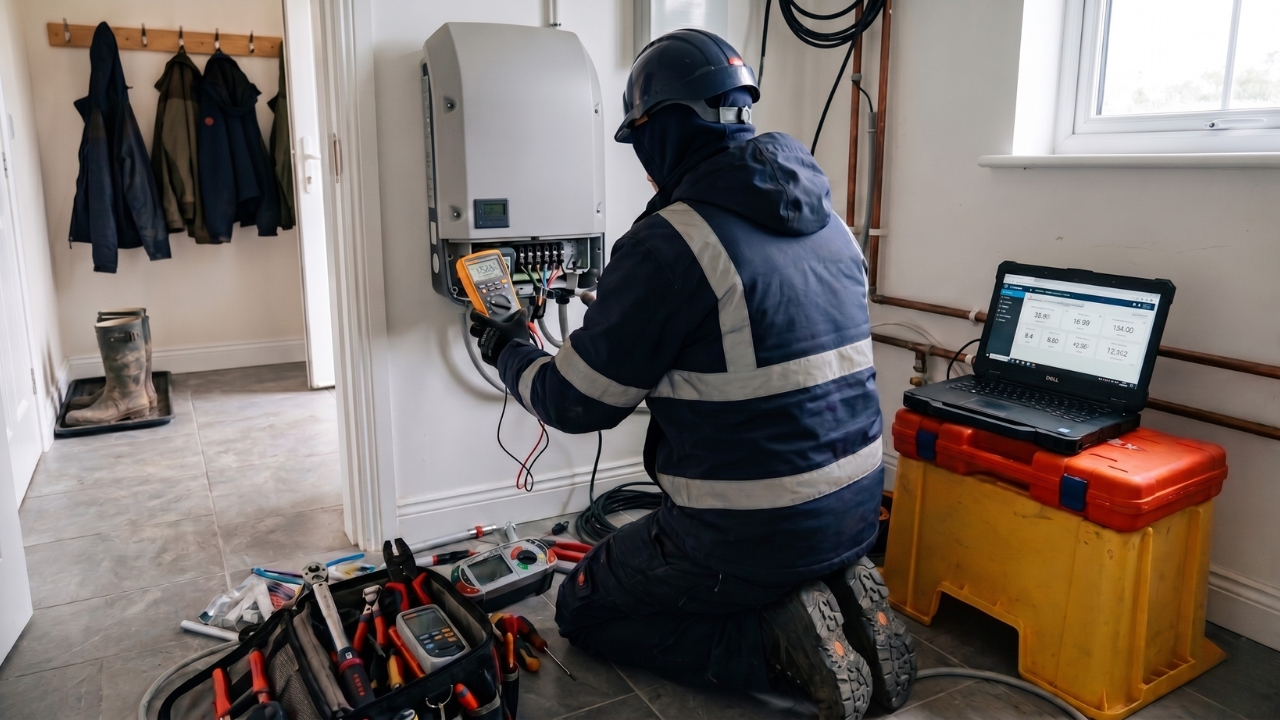
Picking solar panels gets most of the attention, but the inverter you choose matters just as much. It’s the piece of kit that converts the DC electricity your panels produce into the AC electricity your home actually uses. Get the wrong one and you’ll leave money on the table, even if you’ve got the best panels on the market sitting on your roof.
So how do you choose the right solar inverter for your home? It comes down to a few practical things: your roof layout, whether you want battery storage now or later, your budget, and how much control you want over monitoring your system. For most Irish homes with a straightforward south-facing roof, a hybrid inverter paired with battery storage offers the best balance of performance and future-proofing. But if you’ve got shading issues or a complex roof with panels facing different directions, microinverters might be the smarter pick.
With over 3,000 installations completed across Ireland, the team at SPV Energy has fitted every type of inverter going. Below, we’ll break down the main options in plain English so you can make a confident decision before getting quotes.
What Does a Solar Inverter Actually Do?
Solar panels produce direct current (DC) electricity. Your home runs on alternating current (AC). Without an inverter sitting between the two, your panels would be generating power your house can’t use.
Think of the inverter as the brain of your solar PV system. Beyond converting DC to AC, a good inverter manages how energy flows around your home, decides when to charge a battery (if you have one), and feeds surplus electricity back to the grid so you can earn credits through the microgeneration feed-in tariff scheme.
If the inverter underperforms, your whole system underperforms. That’s why it deserves as much thought as the panels themselves.
What Are the Main Types of Solar Inverter?
There are three main inverter types you’ll come across when getting quotes for a home solar system in Ireland. Each one suits different situations, and understanding the differences will help you ask the right questions.
String Inverters
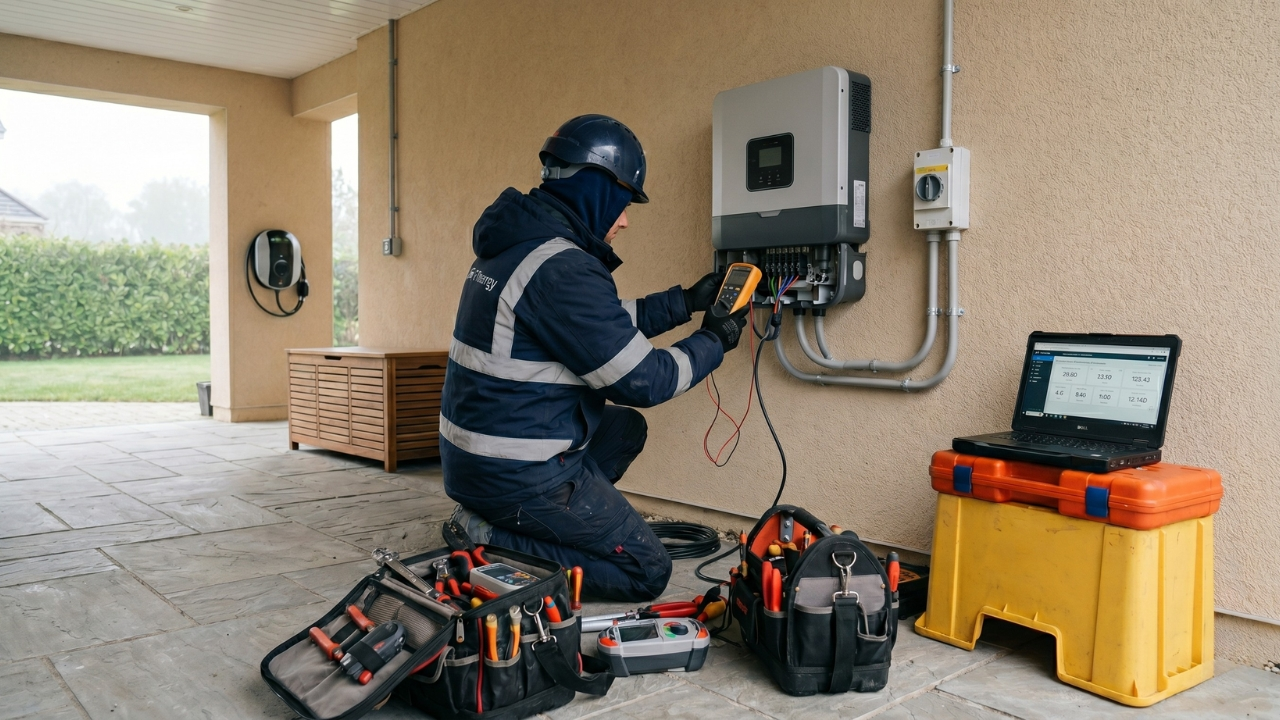
String inverters are the traditional option. All your panels connect together in a “string” and feed into one central inverter, usually mounted on a wall in your utility room or garage. They’re reliable, well-proven, and tend to be the most affordable option upfront.
The downside? If one panel in the string is shaded or underperforming (say a chimney casts a shadow across one panel for part of the day), it drags down the output of the entire string. For a clean, unshaded roof with panels all facing the same direction, a string inverter works grand. For anything more complicated, it’s not ideal.
Microinverters
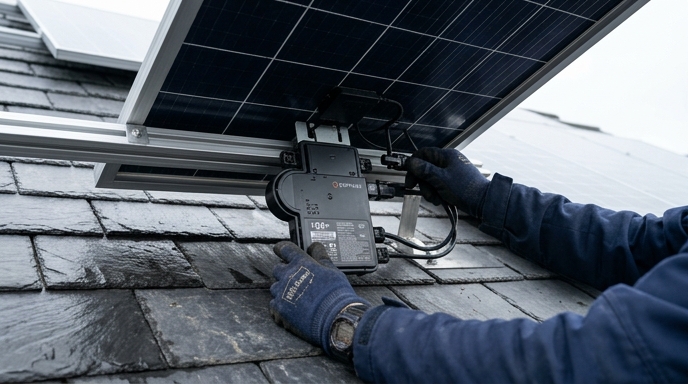
Microinverters are small inverters attached to each individual panel on your roof. Every panel operates independently, so if one panel is shaded, the rest carry on at full output without being affected.
They’re excellent for roofs with partial shading, dormers, or panels split across multiple roof faces. They also make it easy to monitor each panel individually through an app. The trade-off is cost. Microinverters are more expensive than a single string inverter, and because there are more components on the roof, there are more potential points of failure over time (though modern microinverters are built to last 25 years or more).
Hybrid Inverters
Hybrid inverters are what most Irish homeowners end up choosing these days, and for good reason. A hybrid inverter does everything a string inverter does, but it also has a built-in battery management system. That means you can add battery storage without needing a separate battery inverter.
Even if you don’t install a battery straight away, a hybrid inverter means you’re ready to add one later without any rewiring or additional hardware. Given that battery storage is becoming more popular as electricity prices stay high, this future-proofing is worth the slightly higher upfront cost for most households.
Which Inverter Suits Irish Homes Best?
Ireland’s weather and typical roof designs mean some inverters perform better here than others. Here’s what to consider for a typical Irish home.
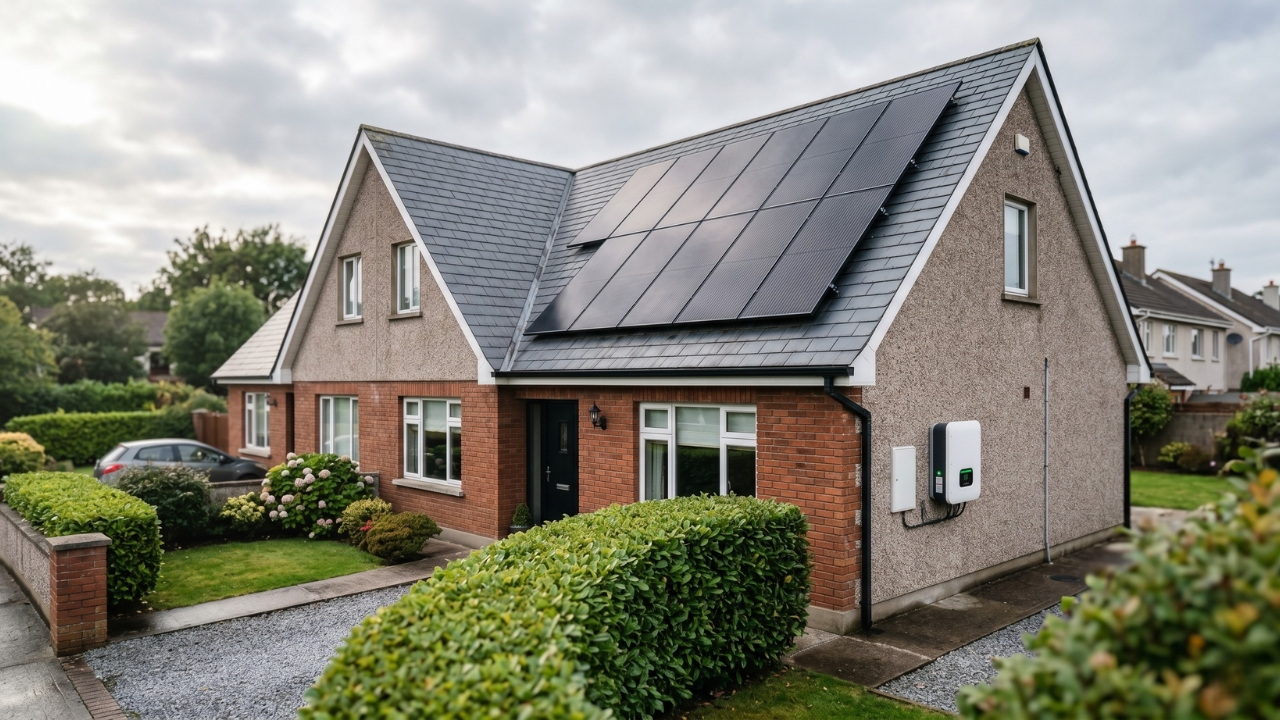
Most houses in Ireland have pitched roofs with panels installed on one or two faces. If your roof is fairly straightforward (south or south-east facing, minimal shading from trees or neighbouring buildings), a hybrid inverter will serve you well. It handles the conversion efficiently and gives you the option to store excess energy in a battery rather than exporting everything to the grid.
If your roof has complications, and plenty of Irish houses do, microinverters become more attractive. Common scenarios include:
- Panels split across east and west-facing roof sections
- Chimneys, vents, or satellite dishes causing partial shading
- Dormer windows breaking up the available roof space
- Nearby trees that cast shadows at certain times of year
- Older houses with irregular roof shapes
SPV Energy’s site survey process assesses all of this before recommending a system. Ray, who leads the technical surveys, will check your roof orientation, shading patterns throughout the day, and your household energy usage to match the right inverter type to your specific situation. There’s no one-size-fits-all answer.
How Important Is Inverter Sizing?
Getting the right type of inverter is one thing. Getting the right size is equally important, and it’s where some installers cut corners to bring down the headline price on a quote.
Matching Inverter Capacity to Panel Output
Your inverter needs to be sized correctly for your panel array. A system with 16 panels rated at 400W each produces a peak output of 6.4kWp. You’d typically pair that with a 6kW inverter. Go too small and you’ll “clip” output on sunny days, meaning your panels produce more than the inverter can handle and you lose that energy. Go too large and you’ve paid for capacity you’ll never use.
Allowing for Battery Storage
If you’re opting for a hybrid inverter with battery storage, the inverter also needs to handle the charge and discharge rates of your battery. Most quality hybrid inverters sold in Ireland handle this without any issue, but it’s worth confirming with your installer that the inverter and battery are fully compatible and that the inverter firmware is up to date.
When comparing quotes, don’t just look at the panel count and battery size. Check what inverter is being proposed and whether it’s appropriately sized for the system. A properly sized inverter from a reputable brand will last 15 to 25 years and pay for itself many times over.
What Should You Look for When Comparing Inverter Brands?
Not all inverters are created equal, and the brand your installer uses tells you a lot about the quality of the overall system. Here are the things worth checking.
Warranty length is a good starting point. Most reputable inverter manufacturers offer 10 to 12 year warranties as standard, with options to extend to 20 or 25 years. If an installer is quoting an inverter with only a 5-year warranty, that should raise questions.
Efficiency ratings matter too. Modern inverters typically convert 97% to 98% of the DC power from your panels into usable AC. That might sound like a small difference, but over 25 years it adds up. Check the spec sheet or ask your installer what the conversion efficiency is for the model they’re proposing.
Monitoring capability is the other big one. A good inverter will come with an app that lets you see exactly how much energy you’re generating, how much you’re using, how much is going to your battery, and how much you’re exporting to the grid. SPV Energy sets up monitoring apps for every customer at the point of installation, so you can track your system’s performance from day one.
Does Choosing the Wrong Inverter Affect SEAI Grant Eligibility?
The short answer is no, not directly. The SEAI solar PV grant (currently up to €1,800 for homeowners) doesn’t specify a particular inverter type. What matters is that your system is installed by an SEAI-registered installer and that the installation meets the required standards.
That said, choosing the wrong inverter can indirectly cost you. An undersized or poorly matched inverter means your system generates less electricity, which means smaller savings on your bills and less surplus to export. Over the 25-year lifespan of a typical system, that adds up to hundreds or even thousands of euro in lost returns.
SPV Energy handles the entire SEAI grant application on your behalf, and their team ensures every component in your system meets the requirements. Many customers report receiving their grant within 21 days of installation, which takes the sting out of the upfront cost.
When Should You Ask for Professional Advice?
Honestly? Before you get too deep into the specs. It’s useful to understand the basics (which is what this guide is for), but trying to spec your own inverter based on online research alone is a recipe for frustration.
Every home is different. Roof pitch, orientation, shading, household energy consumption patterns, whether you work from home, whether you have an EV or plan to get one, whether you want battery storage now or later: all of these factors influence which inverter is right for you.
The best approach is to get a proper site survey done by a qualified installer. SPV Energy offers free consultations and site surveys, with no pressure to commit. Their team of SEAI-certified professionals will assess your property and recommend a system (including the inverter) tailored to your specific situation. You can reach them on 049 489 1207 or request a callback through their website.
Getting three or four quotes is always smart. Just make sure you’re comparing like with like, and that includes the inverter brand, type, and size, not just the number of panels and the bottom-line price.