
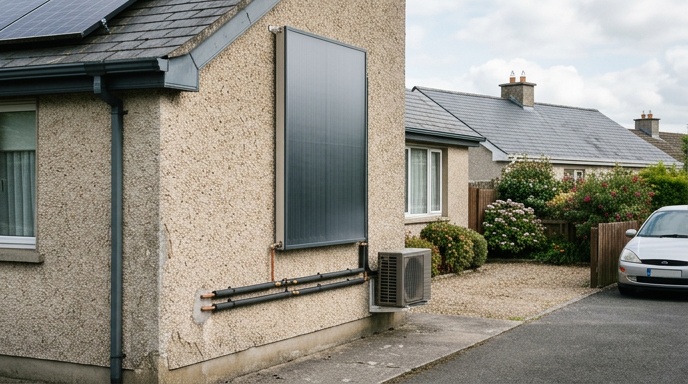
Thermodynamic solar panels have been floating around the Irish market for years, often marketed as a clever way to heat your hot water using outdoor air and a small amount of refrigerant. If you’ve been researching hot water options, you’ve probably seen bold claims about year-round performance, even at night or in the rain.
Here’s the honest answer up front. Thermodynamic panels do work in principle, and they can produce hot water in Irish conditions, but they typically cost between €4,000 and €6,500 installed. Reviews across Ireland are mixed, and in most cases a heat pump or a standard solar PV system with a hot water diverter gives better value for money.
Below, we’ll break down how the technology actually works, what it costs, what real users report, and which alternatives are worth a look before you commit.
What Are Thermodynamic Solar Panels?
Thermodynamic panels look a bit like flat radiators mounted on a wall or roof. Despite the name, they don’t rely on sunlight in the same way that traditional solar thermal or solar PV panels do. Instead, they use the principles of a heat pump combined with a refrigerant loop to extract heat from the surrounding air.
The panel itself is usually a slim aluminium plate with a refrigerant flowing through it. The refrigerant absorbs ambient heat, gets compressed to raise its temperature, and then transfers that heat to a hot water cylinder through a heat exchanger.
How to Set Up a Thermodynamic Panel System
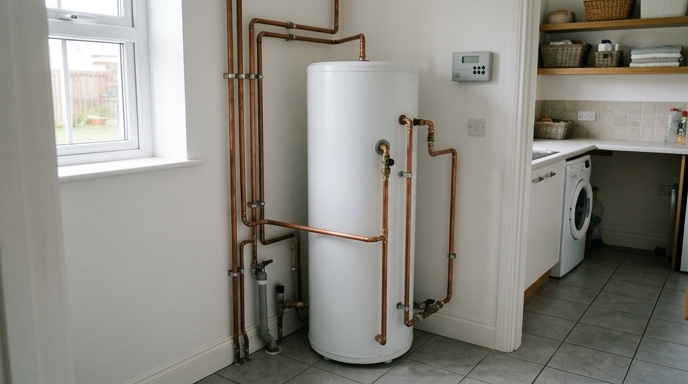
A typical thermodynamic installation includes a few main parts.
- One or two thermodynamic panels mounted on an exterior wall or roof.
- A small compressor unit that pressurises the refrigerant.
- A dedicated hot water cylinder, usually between 200 and 300 litres.
- A control unit that manages temperature and cycling.
Because the panel absorbs heat from the air rather than direct sunlight, manufacturers claim it can operate 24 hours a day, in rain, wind, or cloud. In practice, performance drops significantly in cold weather when the temperature difference between the refrigerant and the outside air narrows.
How Well Do Thermodynamic Panels Perform in Ireland?
Ireland’s climate is mild and damp, which sounds ideal for a system that pulls heat from the air. However, real-world performance is where the marketing claims and customer experience often part ways.
Independent testing and field data from similar climates show that thermodynamic systems have a Coefficient of Performance (COP) that varies widely with air temperature. On a mild day of 12 to 15 degrees, a COP of around 3 is realistic. On a frosty January morning at 2 degrees, that can drop closer to 1.5, meaning the compressor works much harder for less hot water.
Here’s what tends to affect performance in practice.
- Ambient air temperature. Colder weather means less efficient operation.
- Wind exposure. Panels on sheltered walls perform differently to exposed ones.
- Hot water demand. A busy household of four or five will push the system hard.
- Cylinder size and insulation quality.
For a two or three person household with modest hot water needs, the system can cover most of the annual demand. For larger homes, an immersion or oil boiler often has to top it up, which eats into the promised savings.
What Do Thermodynamic Panels Cost in Ireland?
A fully installed thermodynamic hot water system in Ireland generally costs between €4,000 and €6,500, depending on the number of panels, the cylinder size, and the complexity of the install.
Here’s a rough breakdown of what you’re paying for.
- Single-panel system with 200L cylinder: €4,000 to €4,800.
- Twin-panel system with 300L cylinder: €5,500 to €6,500.
- Additional plumbing or upgraded cylinder: €500 to €1,000 extra.
One important point. Thermodynamic panels do not currently qualify for the SEAI Solar Electricity Grant of up to €1,800, because that grant is specifically for solar PV systems. They also don’t qualify for the solar thermal grant, which was withdrawn some years ago. You can check the current list of supported measures on the SEAI home energy grants page to confirm what’s eligible in your case.
What Do Reviews and Users Say?
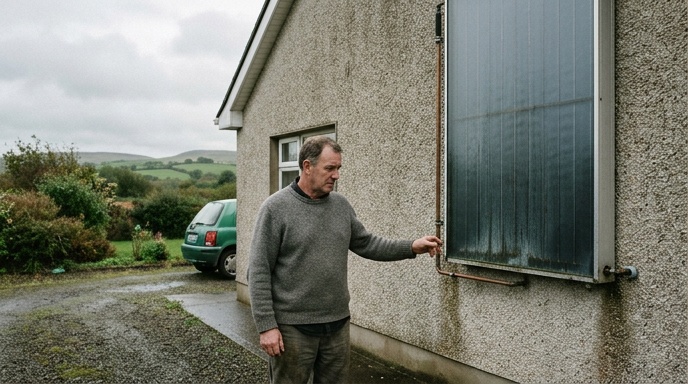
Reviews from Irish and UK homeowners are genuinely mixed. Some households are happy with the reduced immersion usage. Others report the system struggling in winter, noisy compressor units, and disappointing energy bills.
Common Positive Feedback
- Lower immersion heater use during summer months.
- Compact install with no need for large roof space.
- Works without direct sunlight, unlike solar thermal.
Common Complaints
- Compressor noise, particularly if mounted near bedrooms.
- Poor winter performance and higher electricity use than expected.
- Expensive repairs when refrigerant or compressor issues arise.
- Limited number of installers in Ireland who can service the units.
The long-term serviceability is a real concern. Because the technology never took off at scale in Ireland, finding qualified engineers for repairs a decade down the line can be difficult. That’s a very different situation from solar PV, where 3,000+ installations are being carried out across the country every year by SEAI-registered companies.
Better Alternatives for Hot Water and Energy Savings
For most Irish homeowners, there are more proven ways to cut energy bills and get help with hot water. Two options stand out.
Solar PV With a Hot Water Diverter
A standard solar PV system for the home paired with a hot water diverter (often called an Eddi unit) is a much more flexible option. The panels generate electricity that powers your home first, and any surplus is sent to your immersion to heat the hot water tank for free.
The advantages stack up quickly.
- Eligible for the SEAI grant of up to €1,800.
- Zero VAT on solar PV installations.
- Surplus electricity can also be exported to the grid for credits under the Microgeneration Support Scheme.
- Adds real value to your property and improves the BER rating.
- Far more installers available for long-term servicing.
You get hot water plus electricity for the rest of your home, not just hot water in isolation.
Air-to-Water Heat Pump
If your main goal is heating and hot water together, a proper air-to-water heat pump is a much stronger long-term investment. It’s a bigger job and needs a well-insulated home to work efficiently, but it can qualify for significant SEAI grant support and it heats radiators or underfloor heating as well as your hot water cylinder.
Is a Thermodynamic Solar Panel Worth It?
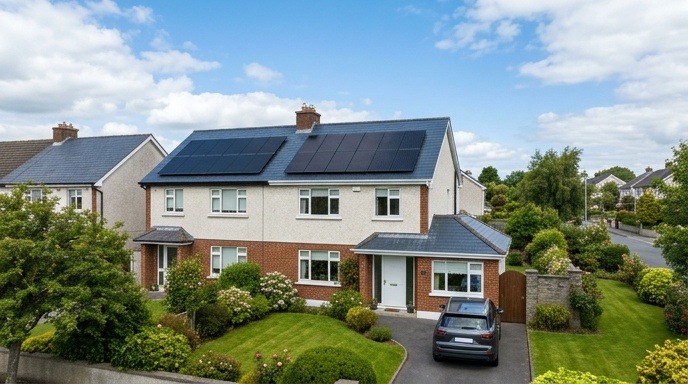
Thermodynamic panels aren’t a scam, but the value proposition in Ireland is weak once you compare it to the alternatives. Between the upfront cost of €4,000 to €6,500, the lack of grant support, patchy winter performance, and limited servicing options, most homeowners will get far better value from a solar PV system with a diverter.
If you’re mainly focused on cutting your hot water costs and reducing your reliance on oil or gas, book a free solar quote before making any decision. A quick chat with a qualified installer will show you exactly what a PV system would cost, what grant you’d qualify for, and how much you’d realistically save each year.
Solar technology has moved on a lot in the last five years. In most Irish homes today, a well-sized PV setup with a hot water diverter is the simpler, better-supported, and better-value route to lower bills.