
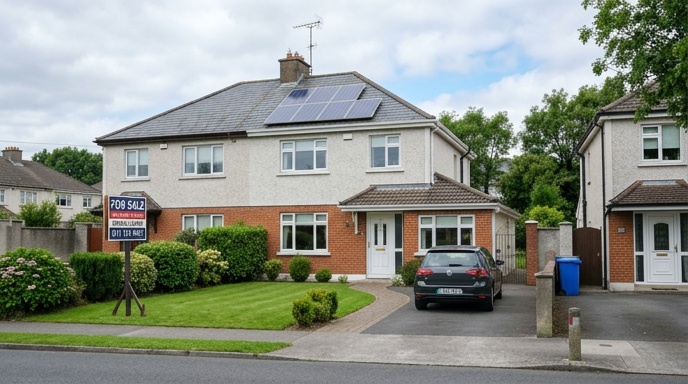
Moving house is stressful enough without trying to figure out what to do with the solar PV system you spent good money on. It’s a fair question, and one we hear a lot from homeowners who got their panels fitted in the last few years and now find themselves with a sale sign in the garden.
The short answer is yes, you can technically take your solar panels with you when moving house, but in practice almost nobody does. Between removal costs, reinstallation costs, fresh scaffolding, new grid registration and the fact that the SEAI grant is tied to the original property, the maths rarely works in your favour. In most cases you’re far better off leaving them and using their value as a selling point.
Below we’ll walk through the practical side of it, what it actually costs, what you lose, and the few situations where taking them with you might genuinely make sense.
Why Most Homeowners Leave Solar Panels Behind
When solar PV is installed on your roof, it’s bonded to the structure and registered with ESB Networks under your property’s MPRN number. The system is treated as a fixture of the home, much the same as a boiler or a fitted kitchen.
There are a few solid reasons most people leave them in place when they sell.
- The panels add real value to the property and improve the BER rating, which buyers are paying closer attention to every year.
- Removal and reinstallation costs eat into any value you might recover.
- The new house may have a completely different roof orientation, pitch, or shading profile.
- You’d need fresh scaffolding, electrical work, and grid registration all over again at the new address.
- The SEAI Solar Electricity Grant was tied to the original property, not to you personally.
For the vast majority of homeowners, leaving the panels behind is the sensible call. They become a selling feature rather than a moving headache.
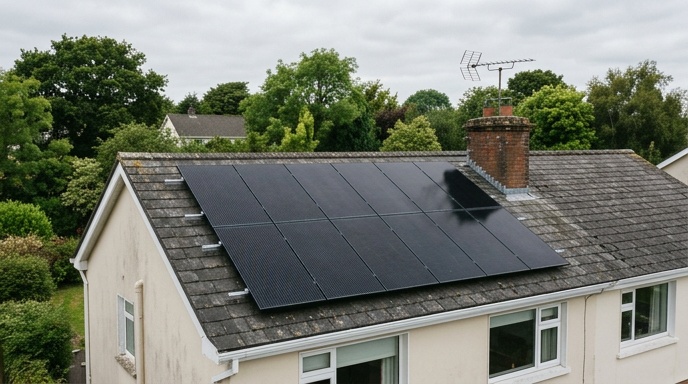
What Does It Actually Cost to Move a Solar PV System?
If you’re still set on taking them with you, it’s worth knowing what you’re signing up for. Removing and reinstalling a typical domestic system isn’t a small job.
Removal Costs at the Old Property
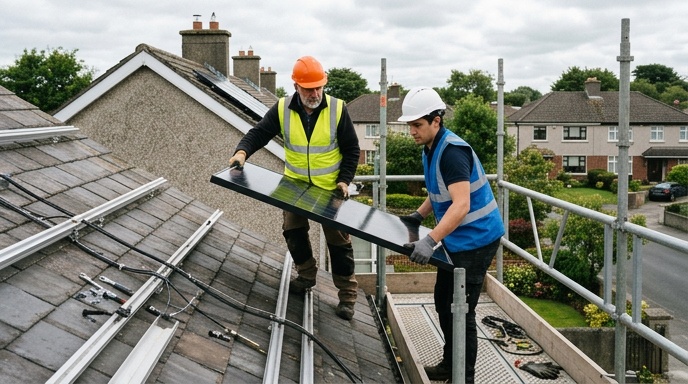
Taking panels off safely involves scaffolding, two qualified electricians, careful disconnection from the inverter, and capping off the roof penetrations so the next owner doesn’t have leaks. Expect to budget somewhere between €1,500 and €2,500 just for the removal, depending on system size and access.
Reinstallation Costs at the New Property
At the new house you’re essentially paying for a brand new installation, minus the panels themselves. That means scaffolding again, new roof mounts, new cabling runs, possibly a new inverter location, and fresh registration with ESB Networks. A reinstallation typically runs €2,500 to €4,500 for a standard domestic array.
The Hidden Extras
People often forget the bits in between.
- Roof repairs at the old property where the mounts were fixed.
- Transport and safe storage of the panels in the meantime.
- A new NC6 notification to ESB Networks for the new address.
- Potential damage to panels during removal, which voids most manufacturer warranties.
All in, you’re often looking at €4,500 to €7,000 for the full move, and that’s before any roof repair work at either end.
What Happens to the SEAI Grant if You Take the Panels?
This is where a lot of homeowners get caught out. The SEAI Solar Electricity Grant of up to €1,800 is paid against the property, not the homeowner. Once the grant has been claimed on a house, that house has used its entitlement.
So if you remove the panels and bring them to your new home, two things happen. The new property cannot claim a fresh grant for those same panels, because they’re not new. And the buyer of your old house cannot claim a grant either, because the property has already had one drawn against it (and now has no panels to show for it).
You also need to deregister the system with ESB Networks at the old address and re-register at the new one, which means losing your existing microgeneration feed-in tariff arrangement with your electricity supplier and setting up a new one from scratch.
When Does It Actually Make Sense to Take Them?
There are a handful of situations where moving the system can stack up financially. They’re not common, but they exist.
- The system is less than two years old and was a particularly large or high-spec install with battery storage.
- You own both properties and aren’t selling, so there’s no buyer factor to consider.
- The new property has significantly better roof orientation and you’d see a real production uplift.
- You’re moving locally and can use the same installer to handle both ends in one coordinated job, which cuts the cost considerably.
In those cases, get a written quote from a qualified installer for the full removal and reinstall before you commit. Don’t assume, get the numbers.
Selling Your House With Solar Panels Attached
If you decide to leave them, which is what we’d recommend in nine cases out of ten, the panels become a genuine asset in the sale. Buyers in Ireland are increasingly clued in on energy costs, and a property with solar PV and a strong BER rating typically sells faster.
A few things to sort before listing.
- Pass on the system documentation, inverter manuals, and monitoring app login details to the new owner.
- Contact your electricity supplier so the microgeneration export payment can be transferred to the new occupant.
- Let ESB Networks know about the change of ownership at the MPRN.
- Make sure any remaining manufacturer warranties on panels, inverter, and battery can be transferred.
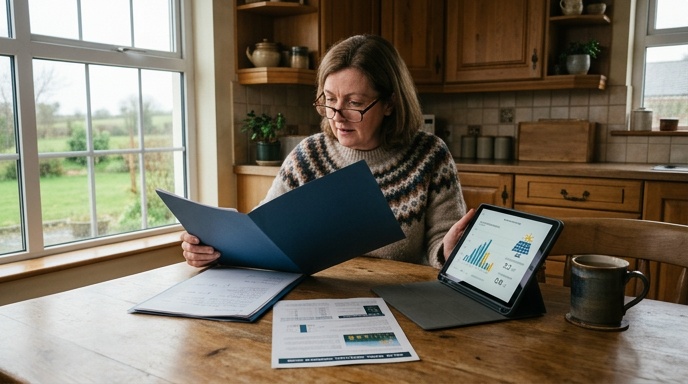
Estate agents will usually flag the system in the listing, and it’s worth getting your last 12 months of generation data ready to show prospective buyers what the system actually produces. Real numbers sell better than estimates.
What About Battery Storage and EV Chargers?
Batteries and EV chargers sit in a slightly different category to roof-mounted panels. A wall-mounted battery in a utility room or garage is much easier to remove and relocate, and the same goes for an EV charger on an external wall.
That said, both still need a qualified electrician to disconnect and reinstall properly, and the EV charger will need to be re-commissioned at the new address. ESB Networks will also need notification of any changes to the microgeneration setup.
If the battery is integrated with the solar system through a hybrid inverter, taking just the battery and leaving the panels usually doesn’t make sense. You’d be paying to remove and reinstall a battery that no longer has anything to charge it.
Ready to Sort Out Your Solar Setup?
Whether you’re thinking of selling, buying a house with panels already fitted, or planning a fresh install at a new address, it’s worth talking to a qualified installer who can walk you through the options. The wrong decision here can cost thousands.
Get in touch with our team for honest advice on whether moving your system makes sense, or to book a free quote for a fresh installation at your new home.