
Heating water is one of the biggest electricity costs in an Irish home, and the immersion is usually the culprit. So it’s fair to ask whether the sun can take that job on.
In most Irish homes, solar hot water heating now means solar PV panels plus a small device called a hot water diverter. When your panels make more than the house is using, the diverter sends that spare power to your hot water tank instead of the grid, giving you largely free hot water for a good chunk of the year.
It’s a cheap add-on, not a second system on the roof. Here’s how it works, whether your home suits one, and what you’ll pay.
What Solar Hot Water Heating Really Means
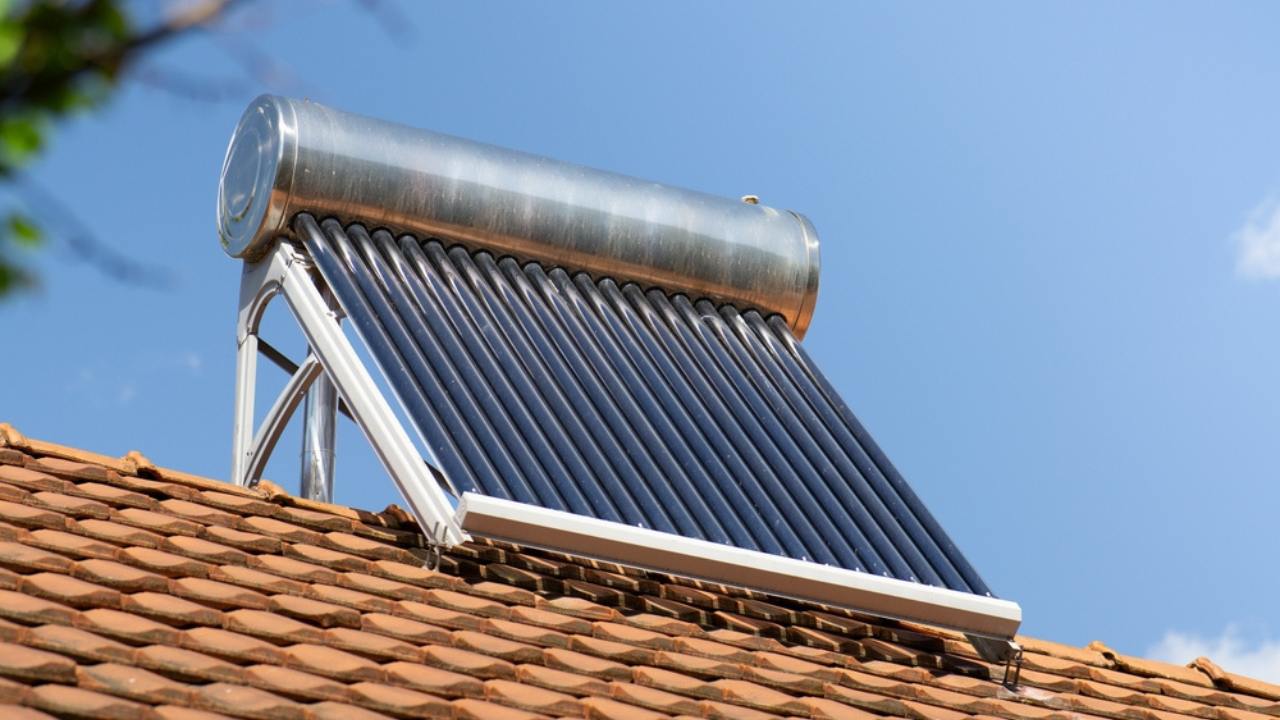
Two things get called solar hot water heating, and they’re not the same. The first is solar thermal, where roof-mounted collectors heat a fluid that warms your water directly. It’s a proven setup with its own SEAI grant of €1,200, but it only ever does one thing, which is heat water.
The second, and far more common choice now, is solar PV paired with a hot water diverter. The panels generate electricity that can run anything in the house, and any spare goes to your immersion through the diverter. It’s the same solar PV system SPV designs for Irish homes, with the diverter added as a small extra rather than a separate array on the roof. For most households PV wins, because the electricity isn’t locked into hot water alone.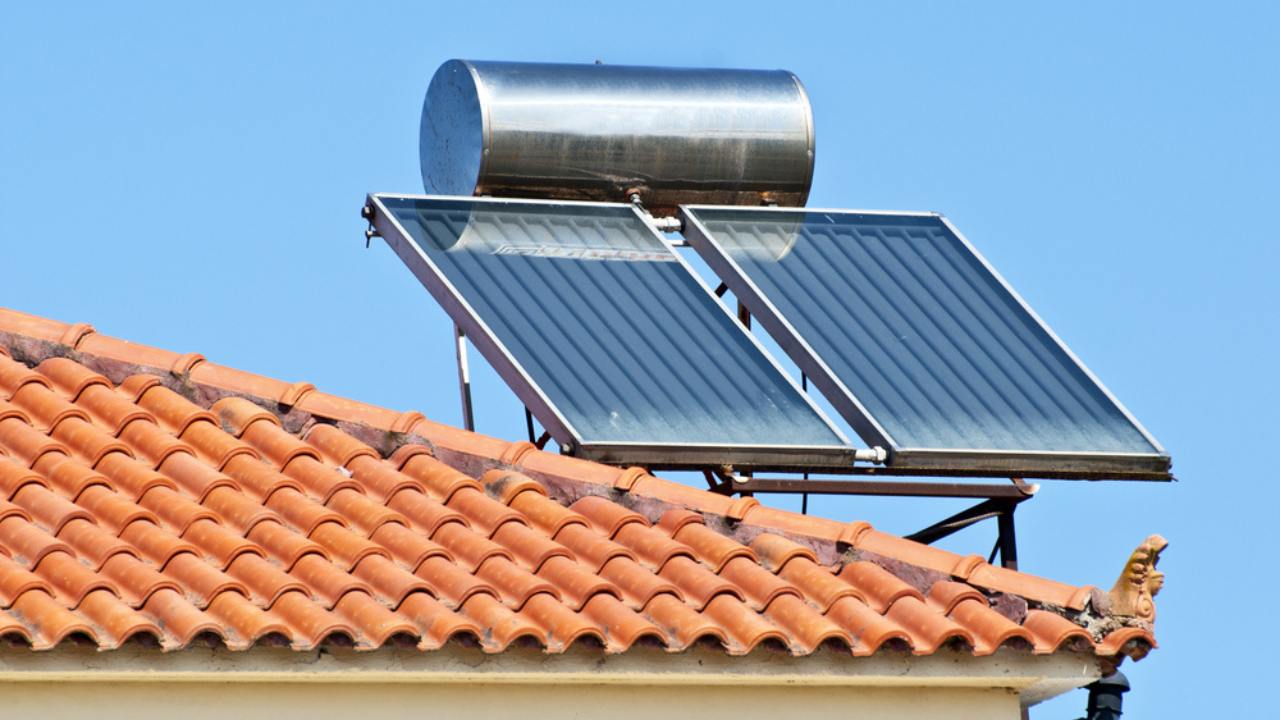
How Does a Solar Hot Water Diverter Work?
A diverter is a small controller, usually fitted beside your consumer unit or your hot water cylinder. It has a sensor clamp fitted around your main supply cable, and it reads the direction and size of the power flowing at your meter many times a second.
The moment it sees electricity leaving the house, meaning your panels are making more than you’re using, it feeds that surplus into the immersion element. It’s proportional, not a simple on or off. If you’ve 400 watts to spare, it sends roughly 400 watts to the element, and if someone puts the kettle on it backs off in moments, so you never pay grid rates to heat water by accident.
The heat collects at the top of the cylinder first and works its way down, so you get usable hot water quickly even on a patchy day. It all happens on its own, with no daily fiddling. By evening the tank is holding energy the sun gave you for nothing.
What Do You Need for It to Work?
A diverter only makes sense if your home is set up for it. The good news is that most older Irish houses already are.
- A hot water cylinder with an immersion element. If you’ve a combi boiler and no tank, there’s nothing for the diverter to heat, so it won’t work until a cylinder is added.
- Solar PV panels that produce more than the house uses at some point in the day. The bigger the system, the more surplus there is to send to the water.
- A registered electrician to fit and wire it. It’s roughly a one to two hour job, done at the same time as the panels or added later.
Homes where people are out during the day tend to gain the most, because that’s exactly when the panels are producing and the surplus would otherwise leave the property. If your tank is well lagged, the water stays hot into the evening when you actually want it, which is where the real saving lands.
How Much of Your Hot Water Can Solar Cover?
Be realistic about the seasons. Through the brighter half of the year, from spring into early autumn, a well-sized system often makes enough spare power on a sunny day to bring a cylinder up to temperature on its own. Plenty of homes barely touch the boiler or the timed immersion for hot water in those months.
Midwinter is the opposite. Short days and low sun mean there’s often little or no surplus to send anywhere, so you’ll lean on your usual heating for hot water again. A diverter doesn’t replace your boiler or immersion, it just does the heavy lifting whenever the sun allows.
System size decides how often that happens. A small 2kWp to 3kWp array leaves less spare for the tank, especially in a busy house. Once you’re up around 4kWp or more, and particularly if the house sits empty during the day, there’s usually a decent surplus that would otherwise flow to the grid, which is exactly the power a diverter puts to work.
Solar Diverter or Battery, Which Fits Your Home?
This is the question most people ask once they understand both. A diverter turns spare solar into hot water. A battery stores spare solar as electricity you can use for anything later. They solve different problems, and plenty of homes end up with one, the other, or both.
When a Diverter Does the Job
If your main worry is the cost of heating water, a diverter is the cheaper answer and it’s hard to beat for that one task. There are no cells to replace down the line and very little to go wrong. For a household with a cylinder and a decent daytime surplus, it quietly pays its way.
When a Battery Earns Its Place
A battery makes more sense if you want to cut your evening electricity import across the whole house, not just your hot water. It’s a bigger spend, and it usually needs a hybrid inverter to manage the charging, so it’s worth reading how hybrid inverters compare with microinverters before you settle on a setup. Where a home already has a battery, the battery normally fills first and there may be little surplus left for a diverter, which is one of the things to weigh when you decide whether to pair solar with a home battery or keep things simple with a diverter on its own.
Which Hot Water Diverters Are Common in Ireland?
Most Irish installs use the myenergi Eddi, which is the diverter you’ll see quoted more than any other here. It handles up to about 3.68kW, has its own app for monitoring, and can work in step with a home battery so the two aren’t fighting over the same spare power. Marlec’s iBoost is another common option, and older setups sometimes ran an Immersun.
They all do the same core job, so the choice usually comes down to price, whether you want app monitoring, and how it fits with the rest of your kit. A good installer will match the unit to your cylinder and your inverter rather than fitting whatever’s in the van.
Upkeep is close to nothing. There are no moving parts, so once it’s wired in and set, it runs quietly in the background. The most you’ll do is glance at the app now and then to see how much water the sun has heated for you.
What It Costs, and Is There a Grant?
A diverter is one of the cheaper add-ons in solar, typically from a few hundred euro upward depending on the model, and some installers include one in a package. Prices vary by home and market, so confirm locally with a written quote.
The diverter has no SEAI grant of its own, and batteries and add-ons sit outside the grant too. What the grant covers is the solar PV system that feeds it, currently up to €1,800 for homes built before 2021, and you can read the detail on solar grants and eligibility before you apply.
The power going to your tank is spare solar you’d otherwise export for very little, so the water is close to free while the sun is out. Actual savings depend on your system, tank and usage, so the SPV solar calculator is a better starting point than any fixed figure.
Will a Diverter Cut Your Export Payments?
A little, because power sent to your tank is no longer exported for a Clean Export Guarantee credit. The trade still works out, since the export rate is far below what you pay to import, so using that energy at home is worth more than the credit you give up.
It’s closer only if a large battery is already taking the surplus, in which case there may be little left for a diverter, so work it out with your installer.
Solar hot water heating comes down to a simple idea, using your spare solar to heat water instead of giving it away. For most homes with a cylinder, a diverter is a cheap, low-fuss way to do it. If you’re unsure it suits your setup, book a site visit through the SPV contact page and the team will size it around how your household actually uses hot water.