
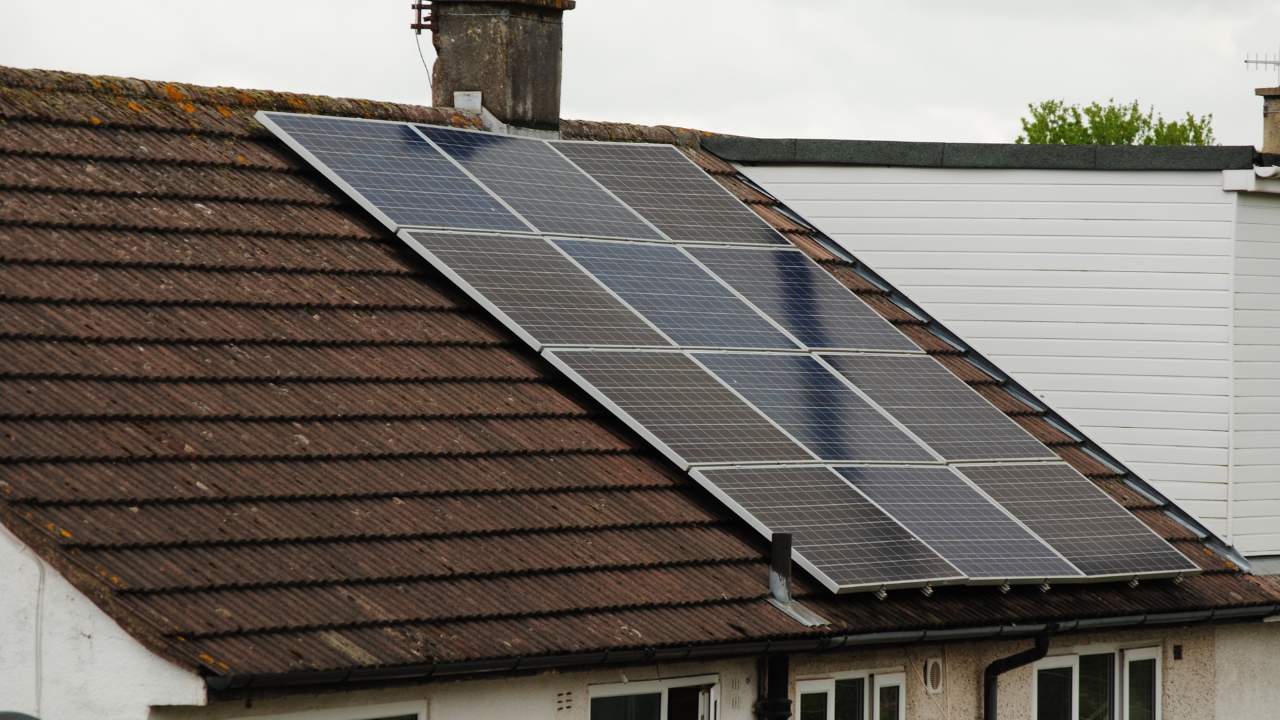
Good news for most property owners. Since October 2022, the vast majority of rooftop solar installations in Ireland need no planning permission at all. Rules changed that year, and the old cap that limited panels to 12 square metres or half the roof was scrapped, so a house can now cover its whole roof and stay exempt.
Planning permission has not disappeared entirely though. Protected structures, some ground mounted arrays and properties near airports still have conditions to meet. This guide sets out where your project stands, for homes, businesses and farms, under the current rules.
| Situation | Planning Permission |
| House rooftop, standard property | Not needed |
| House rooftop on a protected structure | Needed |
| Ground mounted at home, within the size limits | Not needed |
| Ground mounted at home, over 25 square metres | Needed |
| Business or farm rooftop | Not needed |
| Non-domestic rooftop 300 square metres inside a Safeguarding Zone | Needed |
| Wall-mounted panels on a house | Needed |
Do You Need Planning Permission for Rooftop Solar on a Home
For nearly all houses in Ireland the answer is no. Rooftop solar on a house is classed as exempted development, which means you can install it without applying to your local council. Since the 2022 exemption regulations came in, there is no limit on the area of roof you can cover, anywhere in the country.
To stay exempt, a rooftop installation still has to meet a few conditions. Panels should sit close to the roof surface and be kept back from the edges of the roof, and they must not cause hazardous glare. Flat roofs carry their own height and set back conditions. Your installer confirms the exact clearances for your roof as part of the design.
Whether your roof suits panels in the first place is a separate question, and we cover it in our guide to how to know if your roof is suitable for solar PV panels
When Planning Permission Is Still Needed
Some situations fall outside the exemption. Permission, or a formal check with the council, is needed in these cases.
- Protected structures. If your home is on the local Record of Protected Structures, the exemption does not apply and you will need permission, often with a declaration from the council, before any panels go up.
- Architectural Conservation Areas. Panels are usually allowed, but only where the work would not materially affect the character of the area. Check with the council first.
- Near airports and aerodromes. Properties inside a Solar Safeguarding Zone face extra conditions, and the planning authority must be told in writing within four weeks of the work starting. There are 43 of these zones nationally.
- Wall mounted panels on a house. Panels fixed to a wall rather than the roof are not exempt on a house and need permission.
- Hazardous glint or glare. Any installation that causes a glare hazard loses its exemption until the problem is dealt with.
Ground Mounted and Free Standing Panels
Panels mounted in the garden rather than on the roof follow different rules. For a house, a free standing array is exempt up to a combined 25 square metres, as long as it is no more than 2.5 metres tall and enough private open space is kept for the household. Larger garden arrays, or ones that would take up too much of the garden, need permission.
Because rooftop area is no longer capped, most homes get all the capacity they need on the roof. If you are weighing roof against garden, our guide to how much roof space you need for solar panels helps you plan the layout.
Planning Rules for Business and Farm Solar
Non-domestic buildings gained their own exemptions in the same 2022 changes. Offices, shops, hotels, industrial units, farm buildings and similar can now install rooftop solar with no area cap, as long as the site is not inside a Solar Safeguarding Zone. Inside one of those zones a 300 square metre limit applies to each rooftop. Schools and community buildings have their own exempt classes too.
Two conditions matter most for business and farm owners. First, the system has to be primarily for power or heat used on the site itself, meaning more than half of what it generates, and the same protected structure, conservation area and glare rules apply as for homes. Ground mounted and wall mounted arrays have their own separate size limits that vary by building type.
Because commercial roofs and sites vary so much, it pays to confirm the position early. Our commercial solar service covers design, grid connection and any planning checks your site needs.