
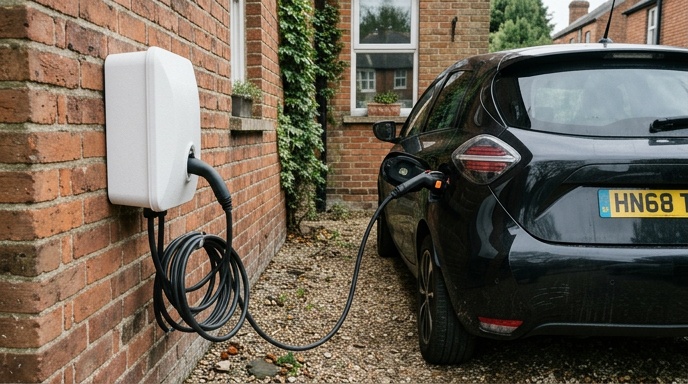
EV charger installation cost in Ireland typically falls between €900 and €1,500 for a standard home charger, fitted and commissioned. The SEAI home charger grant knocks a chunk off that, so most homeowners pay a good bit less once the grant is applied.
The final price depends on your fuse board, the distance from the board to the charger, and whether you want a basic unit or a smart one with app control. A simple job close to the board sits at the lower end, while a longer cable run or a board upgrade pushes it higher.
This guide breaks down the price ranges, the grant you can claim, what moves the cost up or down, and how an EV charger pairs with solar to cut your running costs further.
What Does EV Charger Installation Cost in Ireland?
A home EV charger install in Ireland generally costs €900 to €1,500 supplied and fitted, before any grant. The charger unit itself is usually €500 to €900 depending on the brand and features, with the remainder covering the electrician’s labour, cabling, and testing.
Where you land in that range comes down to the complexity of the job. Here is a rough guide to what typical installs look like.
| Install Type | Typical Cost (Before Grant) |
|---|---|
| Basic 7kW charger, short cable run near fuse board | €900 to €1,100 |
| Smart 7kW charger with app control, standard run | €1,100 to €1,350 |
| Charger with long cable run or minor board work | €1,350 to €1,500 |
| Install needing a fuse board upgrade | €1,500+ |
These are estimates that vary by home and installer, so always confirm a figure with a site survey. A proper expert survey checks your board capacity before anyone quotes a hard number.
How Much Is the SEAI EV Charger Grant?
The SEAI home charger grant is worth up to €300 towards the purchase and installation of a home EV charge point. It applies to homeowners and, under a separate strand, to apartment owners and landlords, with the figure confirmed on seai.ie at the time you apply.
To qualify, you generally need to meet a few conditions. These are current as of 2026, so check the latest rules before you apply.
- You own or have long-term access to an off-street parking space for charging.
- You own, or are buying, an eligible electric or plug-in hybrid vehicle.
- The charger is installed by a registered electrician and meets the required standard.
- You haven’t already claimed the grant for the same property.
You can read the official SEAI electric vehicle grant guidance for the current amount and full eligibility list. The grant is claimed after the work is done, so you pay the installer first and recover the grant portion afterwards.
What Affects Your EV Charger Installation Price?
The biggest cost drivers are the distance from your fuse board to the charger, your existing electrical setup, and the type of charger you pick. A clean, short run with spare capacity on the board is the cheapest scenario, while anything that needs extra cabling or upgrades adds to the bill.
Here are the main factors that move the number.
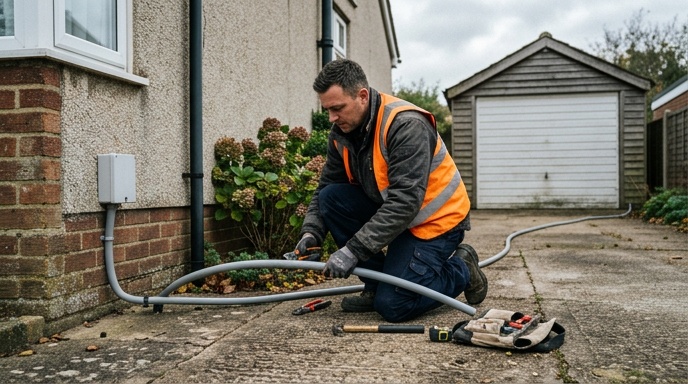
- Cable run length. Longer distances mean more cable, more labour, and sometimes trenching for a detached garage.
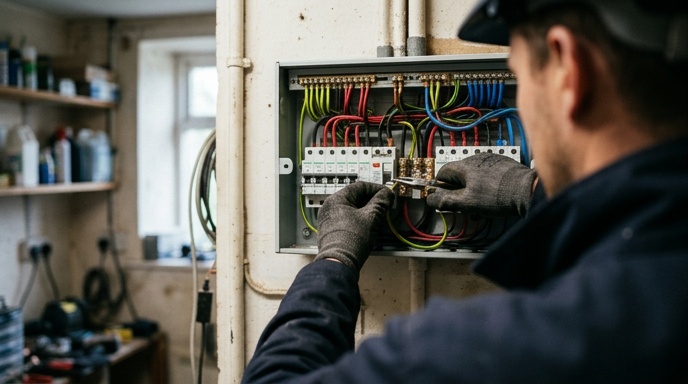
- Fuse board capacity. An older or full board may need an upgrade or a new consumer unit before a charger can be added safely.
- Charger type. A basic untethered unit costs less than a smart charger with scheduling, app control, and load balancing.
- Mounting location. Wall-mounted near the board is simplest. A free-standing post or awkward spot adds cost.
- Earthing arrangement. Some installs need extra earthing protection to meet the regulations, which adds parts and time.
A trusted solar installer walks you through these on a survey so there are no surprises on the final invoice. Insist on a written quote that lists the unit, the labour, and any extras separately.
How Does Pairing an EV Charger With Solar Cut Costs?
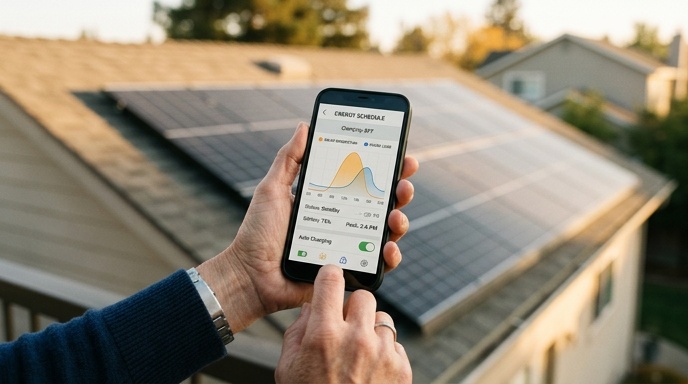
Pairing an EV charger with solar panels lets you charge your car on free electricity you generate yourself, instead of pulling it all from the grid at night. On a bright day, surplus solar that would otherwise export can top up your car, which cuts both your charging and running costs over time.
Smart chargers make this work in practice by only drawing power when your panels are producing a surplus. The benefit depends on your panel output, your driving pattern, and when the car is parked at home.
- Daytime charging suits anyone working from home or charging at weekends when the sun is up.
- Battery storage can hold solar for an evening charge if the car is out during the day.
- Smart scheduling can combine solar with cheaper night-rate electricity for the rest.
If you’re already weighing up solar, it’s worth sizing the system with EV charging in mind from the start.
You can run your own numbers on a solar savings calculator to see how the two work together, and our team fits EV chargers alongside solar installs as part of one tidy job.
Is Solar Worth It for Charging an EV in Ireland?
Yes, for most households that charge regularly, because every unit you generate is a unit you don’t buy. Irish solar still produces useful output across the year, and an EV is one of the easiest ways to soak up surplus generation rather than exporting it for a smaller credit.
The payback improves the more you drive, since you’re offsetting both your home electricity and your fuel spend at the pump.
Who Can Install an EV Charger in Ireland?
An EV charger must be installed by a registered electrician who is Safe Electric registered, as home charge points fall under Ireland’s electrical safety regulations. Using a registered installer is also a condition of the SEAI grant, so a DIY or unregistered job disqualifies you from the funding.
Before you book, it’s worth checking a few things with any installer.
- They’re registered with Safe Electric, the national electrical regulator.
- They provide a completion certificate for the work.
- They handle or guide you through the SEAI grant paperwork.
- The quote is itemised, with no vague lump sums.
We offer EV charger installation alongside our residential solar systems, so homeowners can sort both in one go with a single certified team on site.
How Long Does an EV Charger Install Take?
A standard home EV charger install usually takes 2 to 4 hours, assuming the fuse board has spare capacity and the charger sits reasonably close to it. More involved jobs with a long cable run, trenching, or a board upgrade can run to most of a day.
The typical sequence looks like this.
- A site survey confirms board capacity, the charger location, and the cable route.
- The installer fixes the unit, runs the cable, and connects it to the board.
- The system is tested, commissioned, and demonstrated to you.
- You get a completion cert and, where relevant, support with the grant claim.
Most homeowners are charging the same day the installer arrives, which keeps the disruption to a minimum.
Getting the Right EV Charger for Your Home
The best EV charger for you balances price against the features you’ll actually use, like app control, scheduling, and solar integration. A basic 7kW charger covers most Irish homes, while smart units earn their extra cost if you want to charge on solar or night-rate electricity.
For a quote tailored to your home, your fuse board, and your driving habits, get in touch with the team for a free quote and we’ll talk you through the options and the grant with no pressure.