
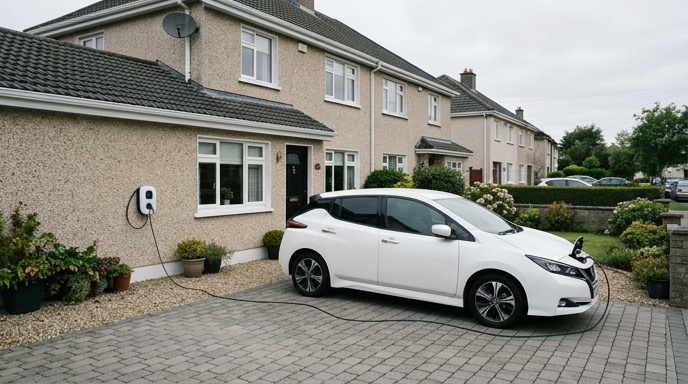
If you’re planning to install a home charger for your electric vehicle in 2026, the good news is there’s still solid grant support available. The SEAI EV home charger grant currently offers up to €300 towards the purchase and installation of a domestic charge point at your property.
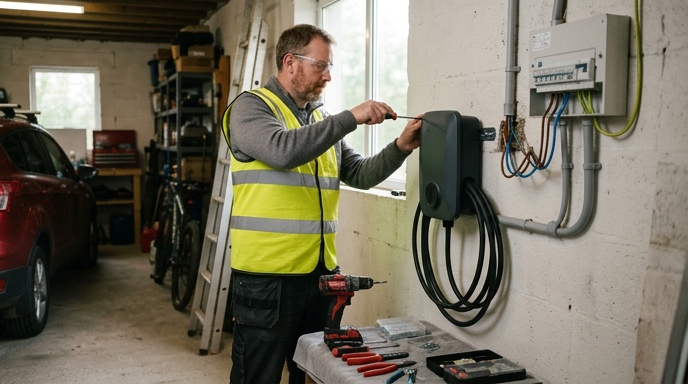
The grant is available to homeowners and applies to any house built before the current year of application, provided you own or intend to own an electric or plug-in hybrid vehicle. You apply through the SEAI online portal, get the charger installed by a Safe Electric registered electrician, and the grant is paid directly to you once the paperwork is submitted.
Below we’ll walk through the exact 2026 rates, who qualifies, how the application works, and the common mistakes that delay payments. If you’re getting solar panels installed at the same time, there are ways to bundle the work sensibly too.
How Much Is the SEAI EV Charger Grant in 2026?
The current grant amount for a domestic EV charger stands at €300. That’s the maximum contribution SEAI will make towards the purchase and installation of a home charge point. The rate has been reduced over the years as charger prices have come down and installation costs have stabilised.
A typical home charger installation in Ireland costs somewhere between €900 and €1,400 depending on the model, the distance from your fuse board, and whether any groundworks are needed. So the grant covers roughly a quarter of a straightforward install.
- Grant amount: €300 per property
- Typical install cost before grant: €900 to €1,400
- Net cost after grant: €600 to €1,100
- Payment method: direct bank transfer to the applicant
- Payment timeline: usually within 4 to 6 weeks of a completed application
The grant is paid to you, not the installer, so you settle the full invoice with your electrician first and then claim back through the SEAI grants portal. Keep every receipt and the certificate of compliance from the electrician.
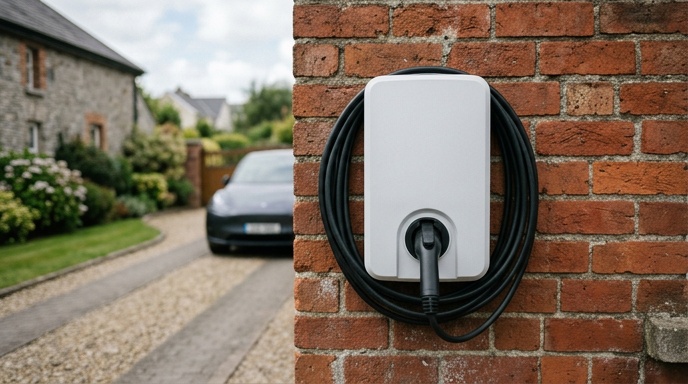
Who Qualifies for the EV Home Charger Grant?
Eligibility is straightforward but there are a few conditions that catch people out. You must be the owner of the property and the property must have off-street parking suitable for a charger. Apartment complexes have a separate scheme with different rules.
Property Requirements
- You must own the home or have written permission from the owner
- The property must have off-street parking, a driveway, or a private garage
- The charger must be installed at the address listed on the application
- Only one grant per property is allowed, ever
Vehicle Requirements
You need to either own an eligible electric vehicle or have a firm intention to purchase one. Both battery electric vehicles (BEVs) and plug-in hybrid electric vehicles (PHEVs) qualify. You’ll be asked to provide the vehicle registration number or purchase confirmation as part of the application.
If you’re buying the vehicle after the charger install, SEAI gives you a window to submit the vehicle details. Miss that window and the application can be refused.
How to Apply for the Grant Step by Step
The application process is entirely online through the SEAI portal. Most applications are approved within two to three weeks provided the documentation is complete. Here’s how it works in practice.
- Register an account on the SEAI website and start a new EV home charger grant application
- Enter your property details, MPRN number, and vehicle information
- Receive a grant offer letter, valid for a set period (usually 6 months)
- Choose a Safe Electric registered installer to carry out the system
- Have the charger installed and get the compliance certificate
- Upload the paid invoice, compliance cert, and photos of the installed charger
- SEAI reviews the claim and pays the €300 directly to your bank account
Don’t book the electrician before you have the grant offer letter in hand. Any work carried out before approval is not eligible for the grant, and this trips up more applicants than any other single issue.
Common Mistakes That Delay or Cancel the Grant
A rejected application isn’t the end of the world but it does mean you’ll be out of pocket for the full install cost. Most rejections come down to a handful of avoidable errors.
- Starting the installation before receiving the grant offer letter
- Using an electrician who isn’t registered with Safe Electric Ireland
- Missing or unclear photos of the installed unit
- Invoices that don’t itemise the charger unit separately from labour
- Applying for a property that has already claimed the grant under a previous owner
- Providing a vehicle registration that doesn’t match the applicant’s name or address
The one-grant-per-property rule is the sneakiest. If you buy a house where the previous owner already claimed the grant, you cannot claim again, even if the old charger has been removed. Always check with your solicitor or the property survey before assuming the grant is still available.
Combining EV Charging With Solar PV
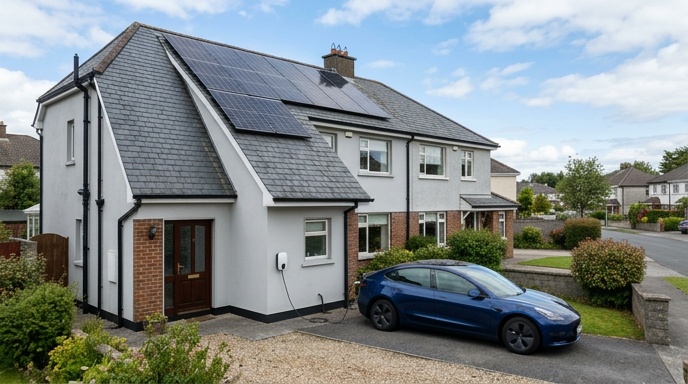
One of the best ways to make your home energy efficient is installing solar panels and an EV charger at the same time. Charging your car during daylight hours off your own solar production is where the real savings kick in. A typical 6kWp solar system can offset a significant chunk of your annual EV charging costs.
You can claim both the SEAI Solar Electricity Grant (up to €1,800) and the EV charger grant on the same property. They’re separate schemes with separate applications, so you’ll need to submit two claims, but the paperwork is very similar.
Why It Makes Sense to Bundle the Work
- One electrician can handle both the solar install and the charger wiring
- Cabling routes and consumer unit work can be planned together, saving on labour
- Smart chargers can be set to only draw power when solar production is high
- Your overall running costs drop significantly compared to grid-only charging
If you’re weighing up the numbers, a solar installation calculator breaks down expected savings and payback periods for typical Irish homes. Pairing that with a charger means most of your daily driving is essentially fuelled by sunlight.
What About Apartment and Commercial Chargers?
The €300 grant is specifically for private homes with off-street parking. If you live in an apartment or manage a multi-unit development, there’s a separate scheme called the Apartment Charging Scheme, which covers shared and communal charging infrastructure.
For businesses, workplace charging comes under different funding streams, often tied in with fleet electrification supports. Commercial properties looking at bigger installations should also look at how EV charging can be paired with commercial solar and the Non-Domestic Microgen Grant. Our team can walk you through the options if you’re considering a larger project.
Is the €300 Grant Worth the Paperwork?
Honestly, yes. The application takes maybe an hour of your time in total across two sittings, and €300 is a meaningful chunk off the install cost. It also nudges you towards using a properly registered electrician, which matters for safety, insurance, and the long-term reliability of the charger.
The scheme has been running since 2018 and shows no sign of disappearing, but grant amounts have trended downwards over time. If you’re planning to buy an EV in the next 12 months, there’s little reason to hold off on the charger application.
If you’d like a hand pulling together a solar and EV charger install as one project, get in touch with SPV Energy for a free site assessment. We’ll walk you through the grants, the timelines, and what your realistic annual savings would look like.