
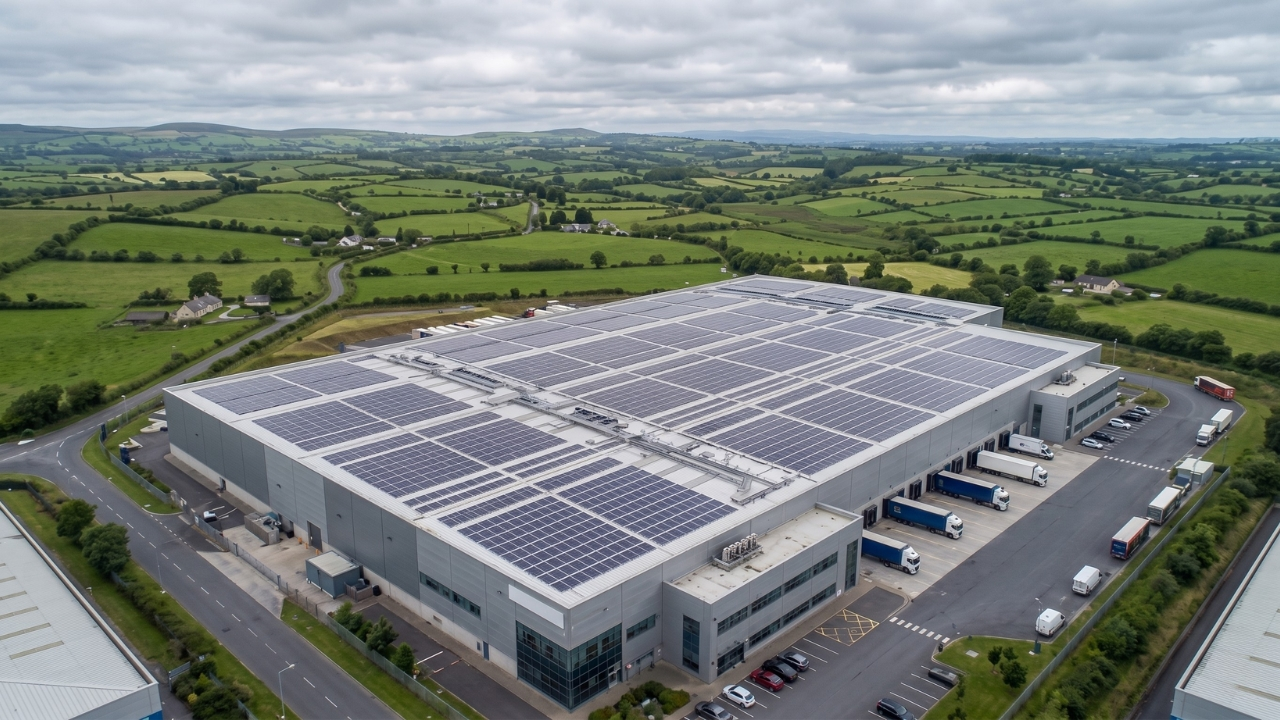
Choosing solar panels for a commercial building isn’t the same as picking them for a house. The roof area is bigger, the energy demands are different, and the financial incentives are on another level entirely. Get the panel selection right and you could cut your electricity costs by 40-50%. Get it wrong and you’ll leave money on the table for years.
So which solar panels are best for commercial sites? For most Irish businesses, monocrystalline panels offer the best balance of efficiency, durability, and long-term return. They perform well in Ireland’s lower-light conditions and pack more power into less roof space, which matters when you’re trying to maximise output across a large commercial array. That said, the “best” panel depends on your roof type, energy consumption pattern, budget, and whether you’re pairing the system with battery storage.
Below, we’ll break down the main panel types available in Ireland, what to look for when specifying a commercial system, and how to make sure your investment actually pays off. Whether you’re running a warehouse, retail unit, office block, or agricultural operation, this guide covers the practical decisions you’ll need to make.
How Do Different Panel Types Compare for Commercial Use?
Not all solar panels are created equal, and for commercial sites, the differences matter more than they do on a typical 16-panel domestic setup. Here’s what you’re working with in the Irish market right now.
Monocrystalline Panels
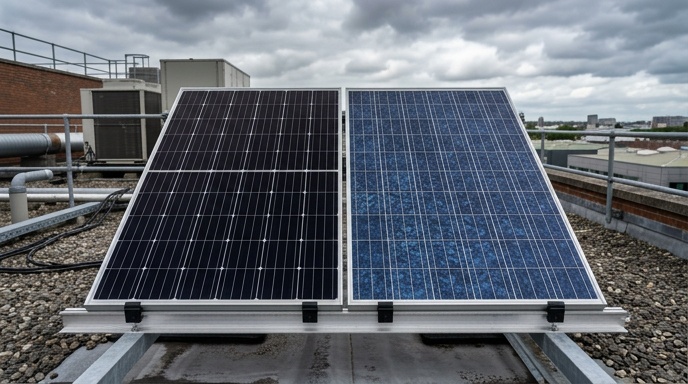
These are the most common choice for commercial installations in Ireland, and for good reason. Monocrystalline panels are made from a single crystal structure, giving them higher efficiency ratings, typically between 20-23%. They handle Ireland’s overcast conditions better than other types because they’re more effective at converting diffused light into electricity.
They cost a bit more per panel, but on a commercial roof where you want maximum output from the available space, that premium pays for itself quickly. Most SEAI-registered installers, including companies like SPV Energy who specialise in commercial solar installations, will recommend monocrystalline panels as the default for business customers across Ireland.
Polycrystalline Panels
Polycrystalline panels use multiple crystal fragments melted together. They’re slightly cheaper per watt but less efficient, usually around 15-17%. For a commercial site with plenty of roof space and a tighter budget, they can still make sense. But in most cases, the gap in efficiency means you’ll need more panels to hit the same output, which can eat into any cost savings.
Thin-Film Panels
Thin-film technology is lighter and more flexible, which makes it useful for certain commercial buildings where structural loading is a concern (think older flat roofs or metal-clad warehouses). Efficiency is lower again, typically 10-13%, so you’ll need significantly more roof coverage. They’re rarely the first choice for Irish commercial projects, but they have their place in specific situations.
What Size System Does a Commercial Site Need?
Sizing a commercial solar system is where the real planning happens. Unlike residential setups where a 3.5kWp to 6.4kWp system covers most households, commercial sites can range from 10kWp all the way up to 200kWp or more.
Matching Output to Consumption
The golden rule is to match your solar output to your daytime electricity consumption as closely as possible. A system that generates more power than you use during daylight hours will export the surplus to the grid. While the microgeneration feed-in tariff from SEAI does give you a credit for exported electricity, the rate you earn per kWh is far less than what you’d pay to buy it back from the grid. So self-consumption is where the real savings sit.
For a typical medium-sized business, a well-designed system might include 80-120 panels producing 35-50kWp. Larger operations like food processing plants, cold storage facilities, or data centres might go well beyond that.
Roof Assessment Matters
Commercial roofs come in all shapes. Flat roofs, pitched roofs, standing seam metal cladding, and everything in between. Each type needs different mounting systems and may affect which panels are suitable. A proper site survey will assess structural loading, orientation, shading from neighbouring buildings or equipment, and cable routing to the main distribution board.
Don’t skip this step. A survey from experienced solar installers can flag issues that would otherwise cost you money down the line, from inadequate roof fixings to shading that kills performance on part of your array.
Why Does Panel Efficiency Matter More on Commercial Roofs?
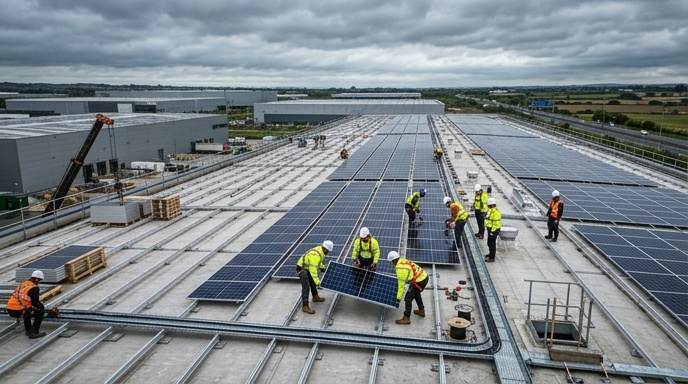
On a house, you might have room for 12-20 panels and that’s it. On a commercial roof, you’d think space is unlimited, but it rarely is. Rooftop plant equipment, skylights, access walkways, fire escape zones, and structural load limits all reduce your usable area.
Higher-efficiency panels let you generate more electricity per square metre. If you’re working with a roof that has constraints (and most commercial roofs do), choosing panels rated at 400W+ rather than 330W means fewer panels for the same output. Fewer panels also means less mounting hardware, less cabling, and often a faster installation.
For businesses trying to maximise the return from the Non-Domestic Microgen Grant (NDMG), higher efficiency panels help you hit the sweet spot where your system size qualifies for the best grant rates without oversizing beyond what makes financial sense.
What Financial Incentives Are Available for Commercial Solar?
The financial case for commercial solar in Ireland has never been stronger. Between grants, tax incentives, and energy savings, most businesses see a payback period of 3-5 years. Here’s what’s on the table:
- Non-Domestic Microgen Grant (NDMG) provides up to €162,600 for eligible commercial installations, with rates scaling from €900/kWp for the first 6kWp down to €150/kWp for systems above 200kWp
- Accelerated Capital Allowance (ACA) lets companies write off 100% of the investment against tax in year one, rather than spreading it over eight years
- 0% VAT on solar panels reduces the upfront cost further for all purchasers
- Microgeneration feed-in tariff earns you credits for any surplus electricity you export back to the grid
- TAMS 3 grants support agricultural businesses investing in solar to offset energy costs on farms
SPV Energy, who’ve completed over 3,000 installations across Ireland, handle all SEAI grant paperwork on behalf of their customers, which removes a lot of the admin burden that puts businesses off starting the process. That end-to-end support, from grant application through to commissioning, is worth looking for in any installer you’re considering.
Should Commercial Sites Include Battery Storage?
Battery storage is becoming increasingly popular on commercial installations, though it doesn’t suit every business. If your operation runs mainly during daylight hours (retail, offices, schools), you’ll use most of your solar generation as it happens and a battery may not add much value.
But if you have significant energy use in the evenings or overnight (hospitality, manufacturing, cold storage), batteries let you store excess daytime generation and use it when electricity prices are highest. Some businesses also use batteries for peak shaving, reducing demand charges by drawing from stored solar power during peak periods rather than pulling from the grid.
The decision comes down to your load profile. A good installer will analyse your half-hourly electricity data and tell you honestly whether battery storage makes financial sense for your specific situation. SPV Energy are known for this kind of straight-talking advice, with customer reviews consistently praising their no-pressure approach to system design.
What Should You Look For in a Commercial Solar Installer?
Choosing the right panels is only half the battle. The installer you work with will determine whether your system performs as promised for the next 25 years, or becomes an expensive headache.
SEAI Registration
For any grant-eligible installation, your installer must be registered with SEAI. This isn’t optional. An unregistered installer means no grant, no matter how good the price looks. Always verify registration directly on the SEAI website before signing anything.
Track Record with Commercial Projects
Commercial installations are more complex than residential ones. You want an installer who has done this before, ideally many times over. Ask for case studies or references from similar-sized projects. A company with 3,000+ installations under their belt will have encountered and solved most of the issues that can arise on commercial roofs.
Aftercare and Monitoring
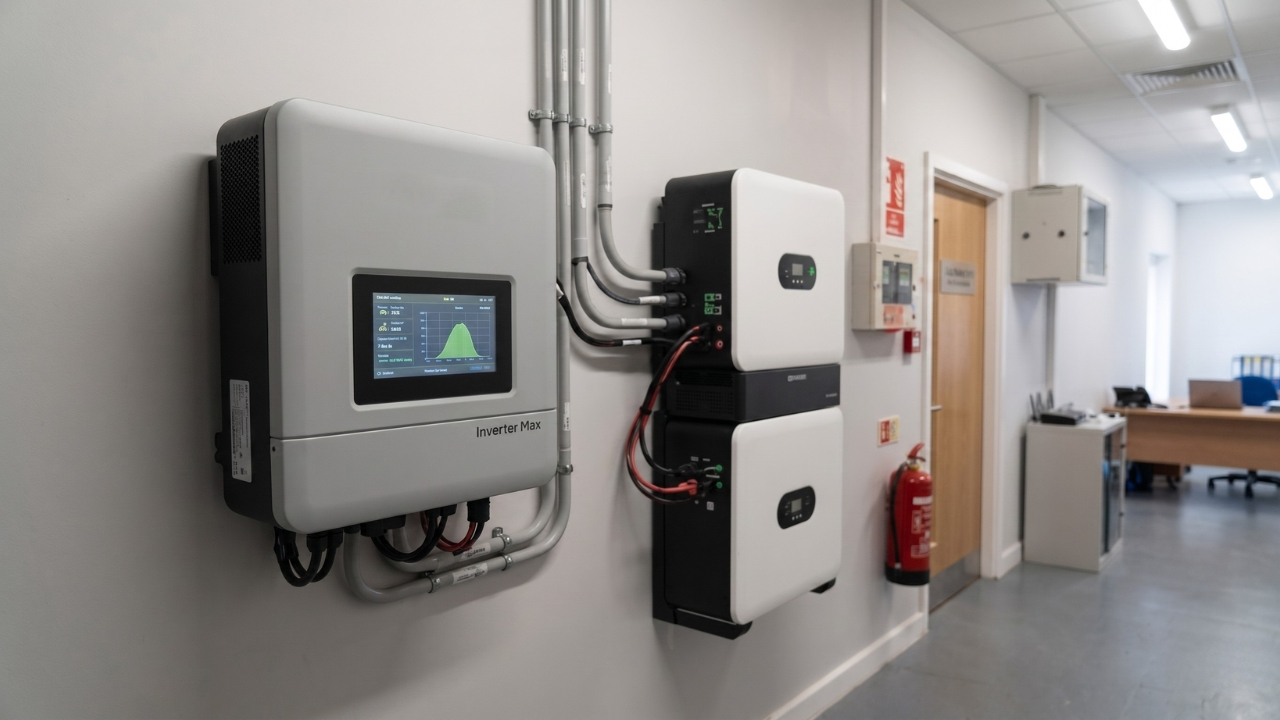
Post-installation monitoring matters. Your system should come with remote monitoring so you can track performance in real time. If output drops unexpectedly, you want an installer who will respond quickly rather than leave you chasing them for weeks. Check review platforms like Trustpilot and Google for feedback on aftercare before you commit.
How Long Does a Commercial Solar Installation Take?
Timelines vary depending on system size and complexity. A straightforward 30-50kWp system on a suitable commercial roof might take 2-3 days for the physical installation. Larger systems or those requiring significant structural work could take a week or more.
The bigger variable is the lead time before installation begins. Site surveys, system design, grant applications, planning (if needed), and equipment procurement all add up. From initial enquiry to panels on the roof, you’re typically looking at 4-8 weeks for a well-organised installer. Some companies, particularly those with strong supply chain relationships, can move faster when needed.
The best approach is to start the conversation early, even if you’re not ready to commit immediately. Getting a free consultation and quote gives you the information you need to make a sound decision without any time pressure.
Making the Right Choice for Your Business
For most commercial sites in Ireland, monocrystalline panels from a reputable Tier 1 manufacturer will give you the best long-term return. Pair them with the right inverter setup, size the system properly around your consumption profile, and take full advantage of the NDMG grant and ACA tax relief.
If you’re considering solar for your business, get in touch with an experienced SEAI-registered installer who can assess your site and give you honest numbers. SPV Energy offer free consultations for commercial customers across Ireland. Call them on 049 489 1207 or request a quote through their website to see what solar could do for your electricity bills.