
A 20 kWh solar system in Ireland costs roughly €19,000 to €27,000 installed before grants, or about €16,600 to €24,600 once the SEAI supports are applied. The 20 kWh figure refers to battery storage, so that price covers both the battery and an array large enough to keep it charged.
Grants take €2,400 off that at most. The Solar Electricity Grant pays up to €1,800 towards the panels, and a separate €600 grant covers a battery of 5 kWh or larger. Both are current for 2027.
This guide sets out what the battery and the array each cost, what the grants actually pay, the warranties that come with a system this size, and whether 20 kWh of storage suits your house.
What Does a 20 kWh Solar System Cost in Ireland?
Budget €19,000 to €27,000 before grants for a 20 kWh system. The storage accounts for €10,000 to €14,000 of that, and the array needed to fill it accounts for €9,000 to €13,000.
Where you land inside the range comes down to brand, roof complexity and whether the battery goes in on the same contract as the panels.
| Component | Typical installed cost |
| 20 kWh battery storage | €10,000 to €14,000 |
| 6 kWp solar array to charge it | €9,000 to €13,000 |
| Total before grants | €19,000 to €27,000 |
| Less SEAI grants | −€2,400 |
| Typical cost after grants | €16,600 to €24,600 |
These are market ranges drawn from Irish installer price guides as of November 2026. Treat them as a planning guide and confirm the figure against a written quote for your own roof.
Cost of a 20 kWh Battery and the Array to Fill It
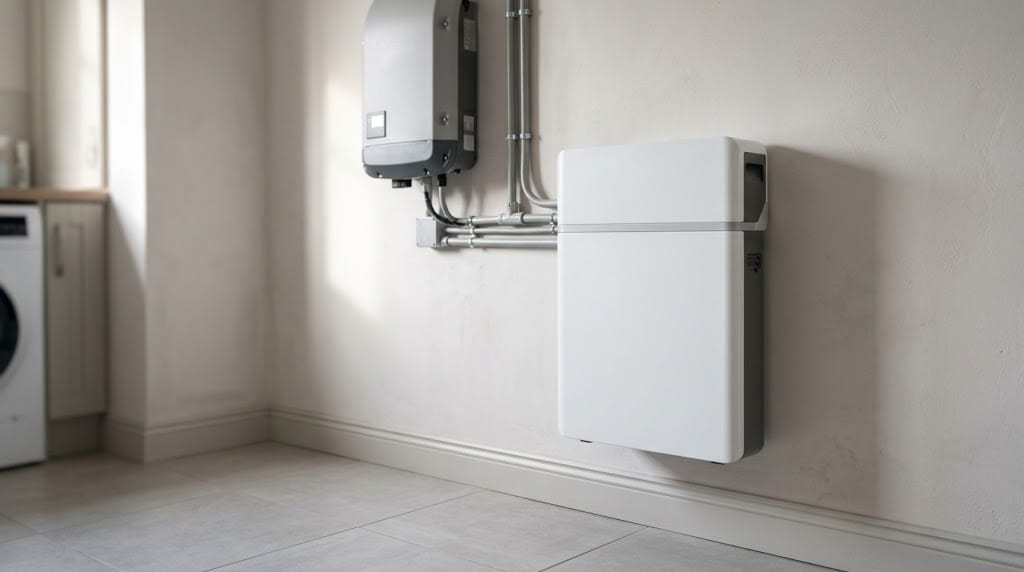
A 20 kWh battery costs €10,000 to €14,000 installed, because at that capacity you are stacking modular units rather than fitting a single box. Two 10 kWh towers, or a stack built from 5 to 6 kWh modules, is the usual route.
Cost per kWh falls as capacity rises, so 20 kWh costs less per unit of storage than 5 kWh does. The total is still higher.
Two details move the final figure:
- Array size. A 20 kWh battery that never fills is wasted money, so a system this size usually pairs with 6 kWp or more, around 14 to 16 panels at roughly €9,000 to €13,000 installed.
- VAT timing. A battery fitted at the same time as the panels carries 0% VAT, while one fitted on its own carries 23% on top, which on a 20 kWh stack is a difference worth planning around.
SEAI Grants on a 20 kWh Solar and Battery System
You can claim €2,400 at most. That is up to €1,800 for the solar panels and a flat €600 for the battery, and it is the ceiling for a standard domestic installation whatever the system costs.
| Grant | Value | Condition |
| Solar Electricity Grant | Up to €1,800 | Caps out at 4 kWp |
| Battery grant | Flat €600 | Battery of 5 kWh or larger |
| Combined maximum | €2,400 | Standard domestic installation |
The panel grant pays €700 per kWp up to 2 kWp, then €200 for every additional kWp up to 4 kWp, capped at €1,800. A 6 kWp array therefore draws the same €1,800 as a 4 kWp one. The battery grant works the same way, so 20 kWh of storage draws the same €600 as 5 kWh.
Eligibility widened in October 2026 to homes built and occupied before 2025, which brought houses built between 2021 and 2024 into the standard scheme. Homes where someone receives certain social welfare payments can access an enhanced grant worth up to €9,000 with a battery, and SEAI’s solar electricity grant page sets out the rules for both routes before you apply. Our guide to solar grants in Ireland covers how the application runs from offer to payment.
What Are the Benefits of a 20 kWh Solar System in Ireland?
Storage at this size turns a solar system from a daytime saver into an around-the-clock one. Without a battery a typical home uses 30% to 40% of what it generates, and the rest goes to the grid at the lower export rate.
With a well-sized battery that share commonly rises past 60%. Our home solar installation page sets out how a domestic system is put together, if you are still weighing storage against a panels-only setup.
Energy Savings From Storing Your Own Power
Storage saves money by cutting imports rather than by generating more. A unit you store and use in the evening is worth your full import rate, while the same unit exported earns the lower Clean Export Guarantee rate your supplier sets.
A 6 kWp array in Ireland generates roughly 4,800 to 5,400 kWh a year. With 20 kWh of storage, a high-use home running an EV or a heat pump can keep most of that on site.
How a 20 kWh System Cuts Your Carbon Footprint
Every unit you generate and use displaces a unit from a grid that still runs partly on fossil fuel. A system with 20 kWh of storage shifts more of your annual usage onto your own generation than a panels-only setup, so the yearly carbon saving is larger for the same array.
How Solar and Storage Affect Property Value and BER
Solar PV feeds into your BER calculation, and a better rating is one of the few upgrades a buyer or tenant can see on paper. Treat any resale uplift as a secondary benefit, since the measurable return is the saving on your own bills.
What Warranties Come With a 20 kWh Solar System?
Panels carry the longest cover at 25 years, while inverters and batteries run shorter. Battery warranties are written as a term plus a cycle count, and whichever limit you reach first ends the cover.
| Component | Warranty |
| Solar panels | 25 years |
| Inverter | 5 years |
| PureDrive battery | 10 years or 10,000 cycles |
| Huawei inverter | 5 years |
| Huawei battery | 10 years or 6,000 cycles |
| MyEnergi Libbi inverter and controller | 5 years |
| MyEnergi Libbi battery | 10 years, unlimited cycles |
| Eddi hot water diverter | 3 years |
| Zappi EV charger | 3 years |
Cycle counts matter most on a stack this size. A 20 kWh battery cycles less deeply than a 5 kWh one for the same daily load, so it usually reaches the time limit before the cycle limit.
One condition worth reading closely is the Libbi battery’s throughput limit of 3 MWh per kWh of usable capacity where the battery is operated manually or by a third party.
Getting a Firm Price on a 20 kWh Solar System
A firm price needs your annual consumption figures and a look at the roof, because 20 kWh of storage is the wrong answer for a lot of houses.
Storage this size suits high-use properties, typically a large home with an EV, a heat pump or both, or a small business running well into the evening. If your usage is more modest, a smaller battery pays back faster and the grant is the same €600 either way.
To get a costed design built on your own usage, request a free quote and we will size the array and the battery to what your house actually uses.