Two schemes in Ireland cover solar panels at no cost to the householder, and both now include a battery. The Warmer Homes Scheme and the Solar PV for the Medically Vulnerable Scheme were expanded from 6 October 2026. Each one funds a system of up to 4 kWp with 5 kWh of storage. Everything else offered as free solar panels in Ireland is a grant, not a free system.
A separate grant of up to €9,000 was introduced at the same time. It is for homeowners on certain Department of Social Protection payments. That grant pays most of the bill, but you still pay the rest, so it is not the same thing as free solar.
Below is what each scheme covers, who qualifies, and how to tell which one applies to your house.
Which Free Solar Panel Schemes Exist in Ireland Right Now
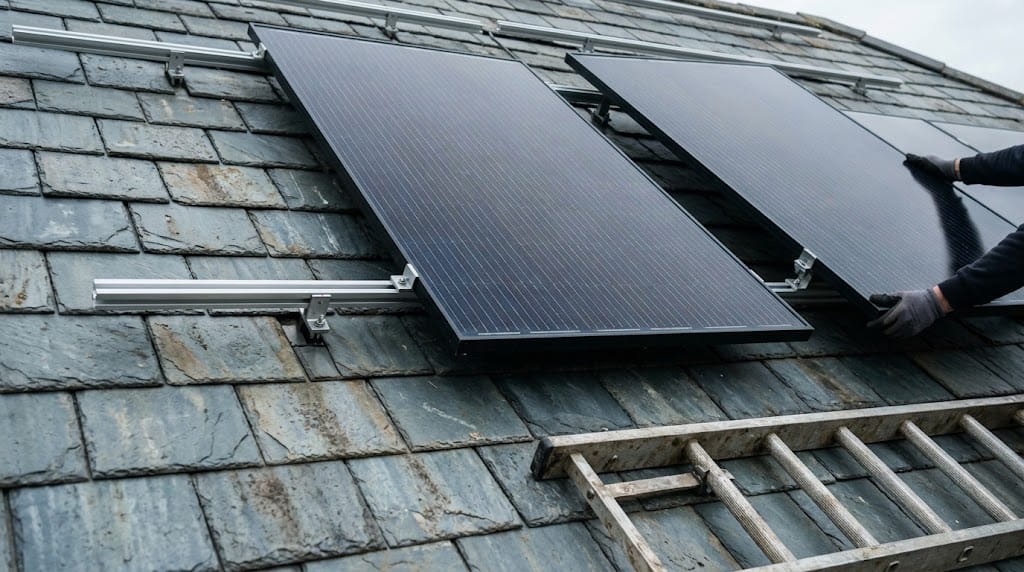
There are four routes to grant-funded solar for homes. Only two of them are free. The Warmer Homes Scheme and the Medically Vulnerable Solar PV Scheme install solar and a battery at no cost. The other two pay part of a bill you still receive.
| Route | What it covers | Cost to you | Who it is for |
| Warmer Homes Scheme | Solar PV up to 4 kWp and a 5 kWh battery | Fully funded | Homeowners on qualifying welfare payments, home built before 2006 |
| Medically Vulnerable Solar PV Scheme | Solar PV up to 4 kWp and 5 kWh battery storage | Fully funded | Households that rely on electrically powered medical equipment |
| Enhanced welfare grant | Up to €8,400 for panels plus €600 for a battery | Up to €9,000 covered, you pay the balance | Homeowners on specified DSP payments, home built and occupied before 2025 |
| Standard homeowner grant | Up to €1,800 for panels plus €600 for a battery | Up to €2,400 covered, you pay the balance | All homeowners and private landlords, home built and occupied before 2025 |
The free routes are deliberately narrow. They are aimed at households facing the highest energy costs, so eligibility is based on welfare payments or medical need. Our guide to solar grants in Ireland sets out the business and farm schemes as well.
How the Warmer Homes Scheme Delivers Free Solar Panels and a Battery
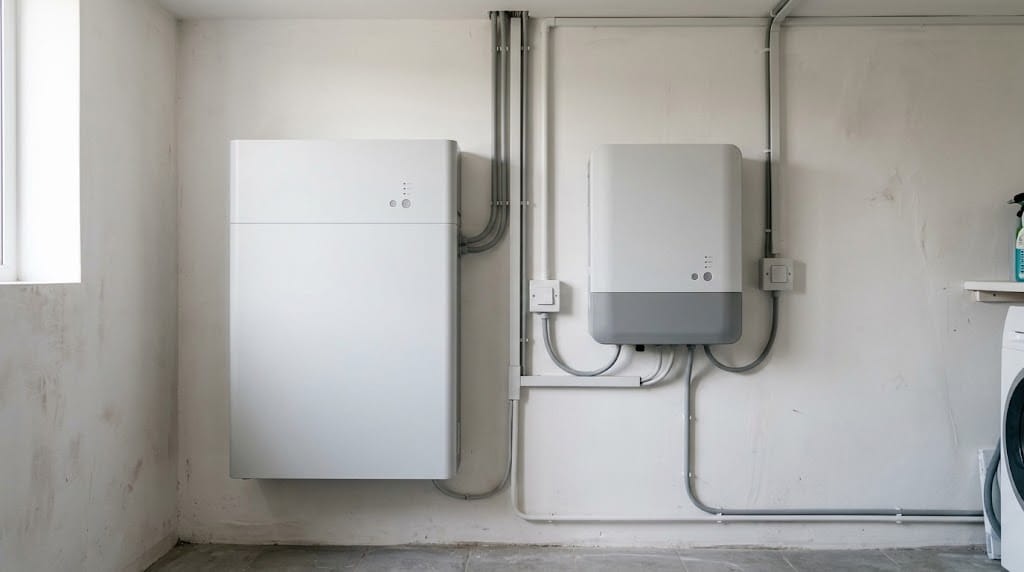
The Warmer Homes Scheme is the main route to free solar in Ireland. SEAI funds the whole upgrade. From 6 October 2026, solar PV of up to 4 kWp and a 5 kWh battery are offered as standard measures, alongside the insulation and heating work the scheme already covered.
You pay nothing. You also do not arrange the job. SEAI surveys the house, decides which upgrades suit it, and appoints the contractor.
Who Qualifies for Free Solar Under the Warmer Homes Scheme
You must meet all four of SEAI’s conditions, not just the welfare one. SEAI’s guidance on fully funded energy upgrades lists them as:
- You own and live in the home
- The home was built before 2006
- You receive an eligible social welfare payment
- The home is found suitable after a survey
The build date rules out a lot of applicants. A household on Fuel Allowance in a house built in 2012 cannot use Warmer Homes, even if the other three conditions are met.
What You Get Installed and How Long It Takes
Qualifying does not guarantee panels. SEAI decides the works based on the age, size and condition of the property, and on the existing heating system. A home that needs attic and wall insulation may get those measures first.
The waiting list is the main drawback. More than 39,500 fully funded upgrades have been delivered through the scheme so far, and demand is high, so this route takes time.
How the Medically Vulnerable Solar PV Scheme Works
This scheme fully funds a system for households that rely on electrically powered medical equipment. It now covers up to 4 kWp of solar with 5 kWh of battery storage. Before October it funded a smaller system with no battery, so the increase is a large one.
Eligibility is based on the life support category of the Priority Services Register, not on welfare payments. Dialysis machines and respirators are typical examples of the equipment involved.
The scheme is also run differently. Energy suppliers manage it, and participating suppliers contact their own eligible customers. There is no SEAI portal application to submit. The property still has to pass a suitability check first.
Comparing Free Solar With the €9,000 Welfare Grant
The €9,000 grant is not free solar. It pays up to €8,400 towards a 4 kWp system and €600 towards a 5 kWh battery. You pay anything above that. In return, you get speed and control over the job.
| Warmer Homes Scheme | Enhanced welfare grant | |
| Cost to you | Nothing | The balance above €9,000 |
| Home age limit | Built before 2006 | Built and occupied before 2025 |
| Who chooses the installer | SEAI | You |
| Who decides the works | SEAI, after a survey | You, within the grant terms |
| Typical timeline | Long waiting list | Normal install, 8 months to complete once approved |
If your house was built before 2006 and you qualify for both, Warmer Homes costs less. If it was built in 2010, Warmer Homes is not open to you, so the enhanced grant becomes the best route available.
Who Qualifies for the €9,000 Solar and Battery Grant
Eligibility depends on receiving one of seven Department of Social Protection payments. There is no means test.
SEAI lists the qualifying payments as:
- Fuel Allowance under the National Fuel Scheme
- Jobseeker’s Allowance for over six months with a child under seven
- Working Family Payment
- One-Parent Family Payment
- Domiciliary Care Allowance
- Carer’s Allowance, where you live with the person you care for
- Disability Allowance for over six months with a child under seven
The rates are €3,350 for each kWp up to 2 kWp and €850 for each extra kWp up to 4 kWp. That caps the panel grant at €8,400. Add a battery of 5 kWh or more and the combined maximum is €9,000.
The property also has to meet three conditions. It needs an MPRN. It must have been built and occupied before 2025. And no solar PV grant can have been paid at that MPRN before.
A separate pilot offers the same €9,000 ceiling to homes with a long-term tenant on a Rental Accommodation Scheme payment through one of the four Dublin local authorities. You need a letter from the local authority before you apply.
What Grants Are Left If You Do Not Qualify for Free Solar
Any eligible homeowner can still claim up to €2,400 across the two standard grants. The solar PV grant pays €700 per kWp for the first 2 kWp, then €200 for each extra kWp up to 4 kWp, capped at €1,800. The battery grant adds a flat €600 for a battery of 5 kWh or larger.
Two changes since October widened this:
- The build date moved from before 2021 to built and occupied before 2025
- The battery grant can be claimed with a new install, added to an existing system, or taken on its own
Batteries fitted with panels under a single contract get the 0% VAT rate that applies to domestic solar. A standalone battery bought as a separate retrofit does not. That difference changes the final price more than most people expect. A solar cost calculator gives you a rough figure for the balance before you start collecting quotes.
How to Apply for Free Solar Panels in Ireland Without Losing the Grant

The rule that disqualifies most applications is simple. Do not start work before your approval arrives. SEAI will not pay a grant on an installation that began before the letter of offer issued.
For the grant-funded routes, the order runs like this:
- Check which scheme fits, using your build date and the payment you receive
- Choose an SEAI-registered solar PV company and get a written quote
- Apply through the SEAI portal and wait for your letter of offer
- Complete the installation within 8 months of approval
- Arrange the post-works BER assessment once the system is commissioned
- Submit the declaration of works and supporting documents for payment
Two details are worth knowing. Grant amounts apply as they stand on the day you create the application, so cancelling and reapplying later means you get the rates in effect then. And if you already hold approval for solar PV and now want the battery grant, you submit a separate battery application rather than changing the first one.
If you are not sure which scheme fits, talk to our team and we will tell you whether you are looking at a fully funded upgrade, a grant-backed install, or neither.