
A 100kW solar system costs €90,000 to €150,000 in Ireland before VAT and before any grant, which works out at roughly €900 to €1,500 per kWp installed. Where your quote lands inside that range comes down to the roof, the grid connection and the equipment specified.
The Non-Domestic Microgen Grant takes a large piece off that. For applications made between 6 October 2026 and 6 July 2027, a 100 kWp system qualifies for up to €45,200, against €22,600 under the standard rates. The grant is capped at 45% of the final eligible invoice, so what you actually receive depends on what you spend.
This guide covers what a 100kW array costs, what the grant pays, what you are left with afterwards, and the roof and grid conditions that move the price.
How Much Does a 100kW Solar System Cost in Ireland?
Expect €90,000 to €150,000 before VAT for a 100kW rooftop system, or about €900 to €1,500 per kWp installed. The spread is wide because a 100kW array is a construction job as much as an electrical one, and two buildings of the same footprint rarely price the same.
A like-for-like quote at this scale should cover all of the following:
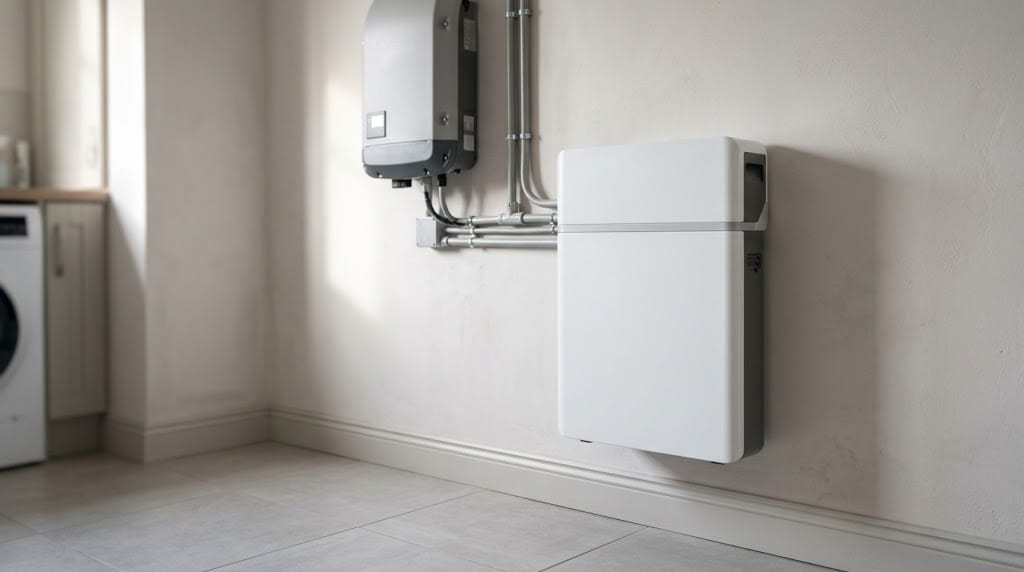
- Panels, inverters and the mounting system
- DC and AC cabling, isolators and protection
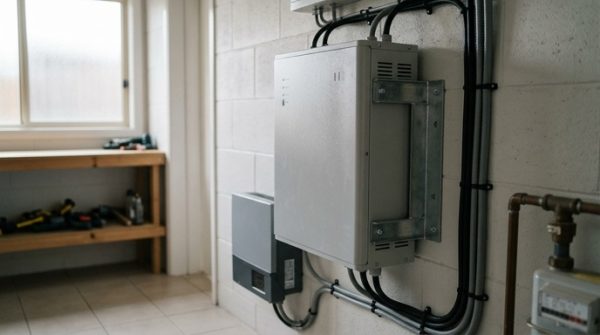
- Connection into your distribution board or switchgear
- The ESB Networks application for your connection type
- Access equipment, commissioning, certification and monitoring setup
A quote that comes in well under the others usually has one of those lines missing. Ask which one before you compare totals. For a wider view, our breakdown of commercial solar panel costs by system size sets 100kW against smaller and larger arrays, which helps if the sizing is still open.
How Much Is the SEAI Grant for a 100kW Solar System?
A 100 kWp system qualifies for up to €45,200 under the Non-Domestic Microgen Grant for applications made between 6 October 2026 and 6 July 2027. Under the standard rates the same system draws €22,600, so the enhanced window is worth an extra €22,600 while it runs.
The grant builds up in capacity bands, and a 100 kWp system draws all three.
| Capacity band | Standard grant | Enhanced grant |
| First 6 kWp | €2,400 | €4,800 |
| 7 to 20 kWp (14 kWp) | €4,200 | €8,400 |
| 21 to 100 kWp (80 kWp) | €16,000 | €32,000 |
| Total for 100 kWp | €22,600 | €45,200 |
Every band doubled for the enhanced window, and the site maximum doubled with it. SEAI’s Non-Domestic Microgen Grant page carries the published rate for each band, and the application itself is made there.
Why the 45% Invoice Rule Caps a 100kW Solar Grant
The grant paid is the lower of the band value or 45% of your eligible ex-VAT invoice. €45,200 is the most the bands will pay, and you reach it only when 45% of your invoice is the larger figure.
That crossover sits at an invoice of about €100,450. Below it, the percentage decides. A €90,000 invoice gives 45% of €40,500, which is what you receive even though the bands add up to €45,200.
So on a 100kW job, a cheaper install also means a smaller grant. The saving and the support move in the same direction.
When the Enhanced Commercial Solar Grant Window Closes
New applications must reach SEAI by 6 July 2027 to get the 45% rate. The window opened on 6 October 2026, and anyone who applied before it keeps the offer they were originally given.
A letter of offer is then valid for eight months. The install has to be designed, connected and commissioned inside that period.
Two dates therefore matter on a 100kW project. The application date fixes the rate, and the offer date starts the eight-month clock.
What a 100kW Solar System Costs After the SEAI Grant
After the grant, a 100kW system lands between €49,500 and €104,800 before any tax relief. The figure tracks your invoice, because the 45% rule bites at the lower end of the range and the €45,200 ceiling bites at the upper end.
| Eligible invoice (ex VAT) | 45% of invoice | Grant paid | Cost after grant |
| €90,000 | €40,500 | €40,500 | €49,500 |
| €120,000 | €54,000 | €45,200 | €74,800 |
| €150,000 | €67,500 | €45,200 | €104,800 |
Tax relief comes after that. Qualifying equipment on SEAI’s Triple E register can be written off against profits in year one under the Accelerated Capital Allowance, against eight years for ordinary plant and machinery. Our Accelerated Capital Allowance guide walks through the claim, and your accountant confirms how it sits in your accounts.
What Drives the Price of a 100kW Solar System in Ireland?
Roof structure, grid connection and site access move a 100kW price more than the panels do. Two buildings asking for the same 100kW array can be tens of thousands of euro apart once the mounting, the ESB Networks process and any electrical upgrades are priced in.
Space comes first. SEAI’s own worked example puts a 30 kWp array at 75 panels across about 125m². Scale that up and 100kW needs roughly 250 panels and over 400m² of usable roof, which rules out a lot of buildings before anything else is costed.
After that, six site details account for most of the difference between quotes:
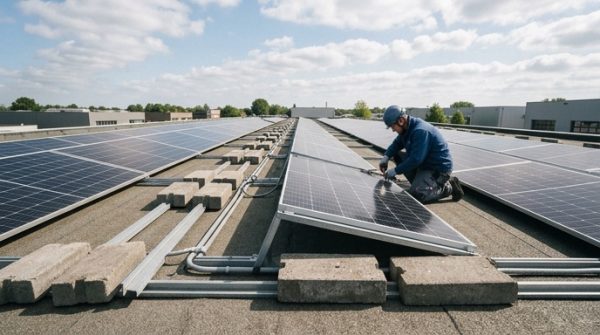
- Roof type.Flat roofs take a ballasted frame and need a structural check on the added load. Metal deck and standing seam roofs use rails or seam clamps instead.
- Grid connection.At 100kW you are well past the simple inform-and-fit route, so a technical assessment and a connection offer are part of the programme.
- Three-phase capacity.Where the supply or the distribution board cannot take the new generation, the upgrade goes on the bill.
- Access and safety.Edge protection, scaffolding or lifts all scale with roof height and layout.
- Export limiting.If the connection offer restricts what you can push out, control gear is added to hold the site inside that limit.
- Ground mounts, roof repairs and battery storage.Each pushes a quote toward the top of the range, and there is no grant support for commercial batteries.
How Selling Excess Electricity Works for a 100kW Solar System
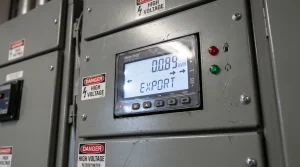
Electricity you export is paid for through the Clean Export Guarantee, at a rate each supplier sets for itself. There is no single national figure, so the tariff is a line worth negotiating when you compare supply contracts.
For a 100kW system, though, self-consumption is the more useful number. A unit used on site displaces your full import rate, while an exported unit earns the export rate, and the import rate is almost always the higher of the two.
That is why sizing starts with your half-hourly consumption data. Two things then decide how much of your output you keep:
- Operating pattern.A weekday-only site exports heavily at weekends, while a seven-day operation uses far more of what it makes.
- Metering detail.Sub-board metering costs extra and shows where the energy actually goes, which matters when you decide how much of the roof to fill.
How to Apply for the SEAI Grant on a 100kW Solar System
Approval has to be in place before you buy anything or start work, so the application sits at the front of the programme. The sequence below is the one SEAI expects.
- Sign a contract with a company on SEAI’s Non-Domestic Microgen register.
- Apply to SEAI and wait for the letter of offer. Nothing is ordered or installed before it arrives.
- Get ESB Networks approval for your connection type. Allow at least four weeks.
- Install and commission inside the eight months the offer runs for.
- Submit the completion paperwork, including the signed declaration and the final invoice.
- Expect payment four to six weeks after a clean submission.
Grants over €10,000 in a calendar year also need a valid tax clearance certificate, which is worth sorting early rather than at claim stage. Our guide to solar grants in Ireland covers the other schemes a business site can draw on alongside this one.
Getting a Firm 100kW Solar System Price Before July 2027
A firm 100kW price needs your half-hourly consumption data and a structural survey of the roof. With both in hand, the array can be sized to your daytime load, the mounting matched to the roof build-up, and the SEAI and ESB Networks applications lined up before the offer clock starts.
The 45% rate closes to new applications on 6 July 2027, and the eight-month build window runs from the offer date. A project starting late in the window has less room than the dates suggest.
To get a costed design for your building, request a commercial solar quote and we will come back with sizing, the grant figure for your system and an estimated payback.